Less scrap, better decisions: Project AluKauKi tackles manufacturing quality and waste using causal AI
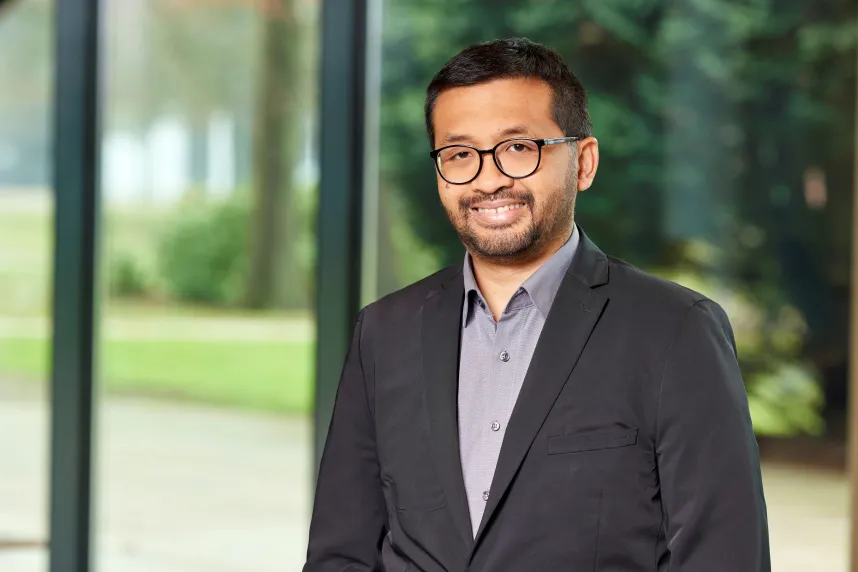
When quality issues arise in complex industrial systems, they can cost manufacturers millions. It's these fatal flaws that Constructor University Professor Hendro Wicaksono will tackle using causal AI in a newly funded project, AluKauKi. The joint initiative with industry partner Electronics GmbH will develop causal and explainable AI that can uncover why manufacturing defects occur and help prevent them, with an initial goal of reducing scrap waste by up to 30%. The project recently secured €475,000 in funding from the German Federal Ministry for Economic Affairs and Energy (BMWE).
Project AluKauKi—Causal AI-supported Reduction of Scrap Rates in Aluminum Die Casting—addresses a deceptively simple question: Can artificial intelligence not only predict that something will go wrong in production, but also explain why and tell engineers what they can do about it? This has been a fundamental limitation to most conventional AI systems, which excel at finding patterns in data, but cannot necessarily explain why the patterns exist or what will happen if conditions change.
"Industry does not simply need more data or bigger AI models. It needs AI that can turn data into understanding. If we can understand why something happens, we are in a much stronger position to decide what to do next," said Prof. Wicaksono.
For example, Project AluKauKi will focus on aluminum high-pressure die casting—an extremely fast process in which molten led is injected into molds at high pressure to manufacture complex components for uses such as automotive and electronics. Even small variations in temperature, pressure, material properties and machine conditions can affect the final output, with their interactions often being complex, nonlinear and difficult for both humans and conventional data-analysis methods to identify.
Traditional AI might recognize certain combinations of conditions that occur when defective components are produced, but correlation is not causation. Knowing that two things occur simultaneously does not necessarily tell an engineer whether changing one will resolve the issue. Causal AI can change this equation. Instead of merely asking, "What is likely to happen?" causal AI can investigate why something is happening and what could happen if parameters are changed.
"Prediction alone is not enough for many industrial decisions," explained Prof. Wicaksono. "If AI tells an engineer that a defect is likely to occur, the next question is immediately: Why? And what should we change? Causal AI gives us the opportunity to move from recognizing patterns toward understanding cause and effect."
Making AI Explainable and Trustworthy
Prof. Wicaksono and his Data-Driven Industrial Systems research group at Constructor University operate on a fundamentally human-centered principle: that AI should strengthen human expertise rather than replace it. Therefore, a second pillar of AluKauKi is to deliver Explainable Artificial Intelligence (XAI). In a factory setting, AI recommendations can have significant consequences for product quality, productivity and cost. Engineers therefore need more than a number on a screen—they need to understand the reasoning behind it so they can make informed decisions.
Rather than functioning as a "black box," the AluKauKi system will be designed to explain the causal chain behind its recommendations. A future system could indicate that a certain process condition contributes to a quality problem, explain the relationship, and show what may happen if engineers adjust a particular parameter. This approach also allows users to explore "what-if" scenarios before making decisions.
"For us, explainability is not an add-on to AI," said Prof. Wicaksono. "It is essential if people are expected to trust and use AI in real industrial environments. The human expert should remain able to understand, question and evaluate the recommendation."
Bridging Science and Industry
The AluKauKi project combines complementary expertise from Constructor University and industry partner Electronics GmbH. Prof. Wicaksono's team at Constructor University will lead the scientific development and validation of advanced AI methodologies, while Electronics GmbH focuses on the industrial side: sensor technologies, production data, software and system integration, and validation under real manufacturing conditions. The result is a hybrid approach that brings together human knowledge, production data, physical understanding and artificial intelligence.
Although AluKauKi will initially focus on aluminum high-pressure die casting, its potential extends far beyond to countless manufacturing processes facing similar challenges. Companies can collect enormous quantities of data, yet they remain unable to identify and resolve the actual root causes contributing to quality issues. The methods developed through AluKauKi are intended to provide a foundation that can be transferred and adapted to other machines, materials and processes.
"A major goal of our research is to bring advanced AI methods out of the laboratory and into environments where they can create measurable value," said Prof. Wicaksono. "With AluKauKi, we have the opportunity to combine cutting-edge causal AI research with a very tangible industrial challenge—reducing waste, saving resources and helping people make better production decisions."
The newly BMWE-funded AluKauKi project will kick off in October 2026, with Constructor University receiving a €277,000 allotment from the total grant amount. The project represents the latest step from Prof. Wicaksono and his team toward transforming AI from a technology that only recognizes patterns into one that can explain causes, support people and improve industrial processes.
Receive all updates straight to your inbox.