AIS26: Dublin summit aims to shape the future of AI-enabled science in Europe
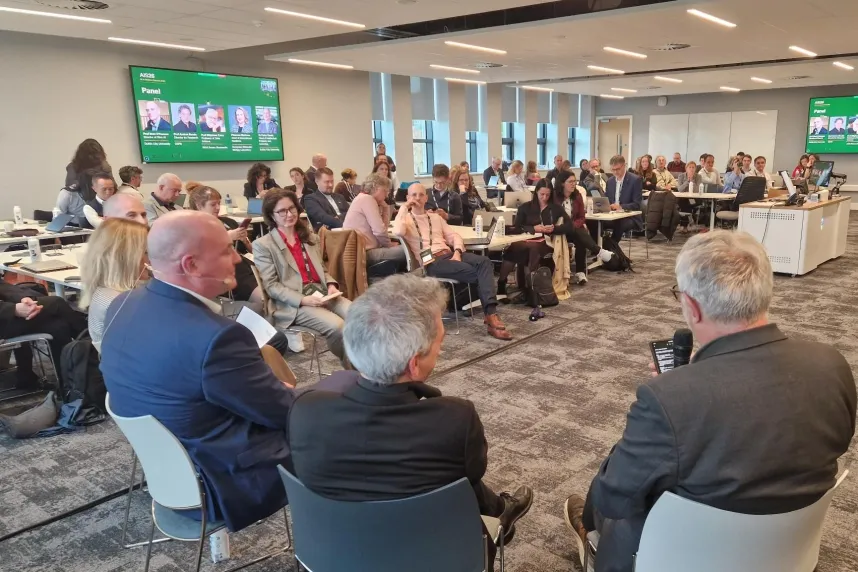
How can Europe forge an AI-powered path to accelerated scientific discovery? This was the question at the heart of the 2026 AI in Science Summit (AIS26) held October 15-16 in Dublin, Ireland. The conference brought researchers, AI specialists, policymakers, industry and others together to explore how artificial intelligence can transform scientific research in Europe. Constructor University and its affiliate Constructor Knowledge Labs contributed to AIS26 as members of the EU's SCIANCE (AI in Science) consortium, moderating a policy panel discussion and delivering an interdisciplinary workshop to support the development of the Resource for AI Science in Europe (RAISE).
RAISE aims to connect Europe’s scientific communities, AI expertise, data, computing capacity and research infrastructures through a coordinated European ecosystem. It's online Hub launched at AIS26 on October 15. At the summit, Dr. Mariia Snigireva, Executive Director of Constructor Knowledge Labs and SCIANCE lead for AI research Infrastructure and cooperation, moderated a panel discussion during the session “The European Engine for Scientific Discovery: How RAISE Is Taking Shape." The panelists discussed how to pool resources across Europe, the scientific challenges RAISE should address, long-term funding, and the benefits that RAISE can offer researchers and organizations.
"At the end of the panel, I asked each speaker one question: In 2030, what one result will show that RAISE changed how Europe does science?" recounted Dr. Snigireva. "AI will change science with or without RAISE. So RAISE must deliver clear added value. It must help researchers do work that one lab or one country cannot do alone. Constructor will continue to support this goal through SCIANCE."
On the conference's second day, Dr. Snigireva and Prof. Mariana Macedo, Assistant Professor of Computer Science and Engineering at Constructor University, organized and co-led the SCIANCE consultation workshop “Shaping the RAISE SRIA: Interdisciplinary Cooperation ion Priorities for AI-Enabled Science.” Participants explored five priority areas for interdisciplinary cooperation: skills and team composition, cooperation mechanisms, governance structures, ethical oversight, and infrastructures for the responsible development, sharing and reuse of data and AI models. The workshop's outcomes will contribute to the SCIANCE Strategic Research and Innovation Agenda (SRIA) for RAISE.
"We asked the participants to examine the barriers to interdisciplinary work with AI," said Prof. Macedo. "They came from different disciplines and career stages, and they had different roles. But all groups selected the same main priority: AI training for researchers. Researchers must know when AI is a good tool, how to apply it, and how to check the results. We're excited to continue this work at our next SCIANCE workshop in Bremen on November 3."
AIS26 was coordinated by University College Dublin and Taighde Éireann–Research Ireland as an official event of the Irish Presidency of the Council of the European Union, and was a flagship event of European AI Innovation Month. Its theme was “Reaching a New Level of Ambition in Research and Innovation."
Receive all updates straight to your inbox.