World famous or local legend? New study investigates global and local forms of collective memory
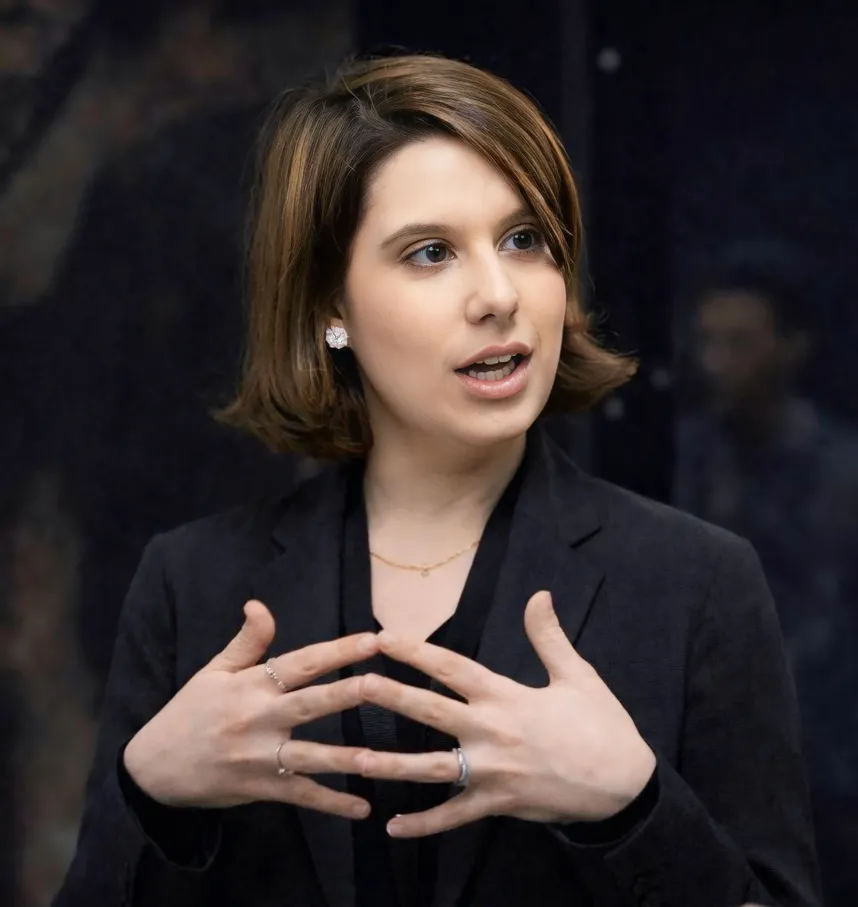
Napoleon Bonaparte and Bernardo O’Higgins: two 19th-century military leaders renowned to this day in their native countries of France and Chile. Yet, while Napoleon's name and exploits are known throughout the world, O’Higgins remains largely obscure outside his homeland. This phenomenon demonstrates the distinction between global and local collective memory—the shared knowledge of the past that shapes group identity—and is the topic of newly published research from Constructor University’s Professor Dr. Mariana Macedo together with Dr. Melanie Oyarzun, Professor Dr. Cristian Candia and Professor Dr. César A. Hidalgo.
"While the name O’Higgins is as recognizable to Chileans as the name Napoleon is to the French, the latter is also recognized throughout much of the world," writes Macedo et. al. in "Cultural proximity reveals a local premium in collective memory," a new study published this month in the interdisciplinary journal PNAS Nexus. Although constructs like ‘familiarity’ and ‘salience’ have been used in empirical research into collective memory, they often fail to distinguish between local and global forms of fame. Macedo’s latest research focuses on disentangling these two dimensions to better understand how different forms of attention and identity shape what we collectively remember and forget.
The study examined over 50,000 multi-lingual Wikipedia biographies spanning 137 billion page views, and used a gamified online experiment with 41,000 participants to untangle and analyze local and global collective memory. It also looked at three major life events—a Nobel prize, an Oscar, and death—and their effect on how people are remembered.
Macedo and her colleagues found that locality is a key factor in collective memory, with participants about 10 percent more likely to correctly identify famous figures from their own country, and five percent more likely to identify people from their same language group. The study also looked at the impact of three major life events—an Oscar win, a Nobel prize, and death—on collective memory, finding they led to "brief but strong surges" in local prominence, with "slower but sustained increases" in global fame.
Now that the full study is available online, we caught up with Prof. Macedo and her colleagues to discuss and unpack the significance of this project.
What was the most significant or compelling take-away for you from this study and its results?
Mariana Macedo et. al.: Fame is not just about how many people know someone, but also where they are remembered. A person can be famous locally, globally, both, or neither. Major events, such as winning an Oscar or Nobel Prize, often cause a short rise in local attention, while global attention grows more slowly and lasts longer. After a death, local attention may fade while global interest continues to grow. The findings raise a simple question: who remembers them? People are more likely to recognize figures who share their home country or language. This shows that fame has both local and global dimensions, and that a single popularity ranking cannot tell the whole story.
Your study aimed to "untangle" local and global components of collective memory because the two have often been conflated in research. Why did you feel this distinction was important to pursue?
Most studies of collective memory measure fame on a single scale, overlooking the difference between being well known in one place and being recognized around the world—think Bernardo O’Higgins versus Napoleon Bonaparte. But this distinction matters beyond fame. For instance, global recognition can help researchers gain international opportunities, while local recognition is often more valuable for solving problems within a community. Improving public transport in a city, for example, requires local knowledge, language skills, and connections. The value of fame and knowledge can depend on where recognition comes from and what a person wants to achieve.
How might modern technologies challenge the dynamics of local and global collective memory in an increasingly connected and digital world?
Digital media makes it easier to discover people and ideas from around the world, but being exposed to something does not mean we will remember it. Repeated exposure helps build recognition, while language and recommendation systems continue to shape what people see. Online communities may also create a new kind of shared memory based on common interests rather than country or language.
Our research shows that even on a global platform like Wikipedia, people are more likely to recognize or search for figures who share their language or country. Greater connectivity does not necessarily mean everyone will remember the same people. AI could make lesser-known histories more visible, but it could also reinforce the prominence of already famous figures. The key question is not just what information we can access, but whose stories are repeatedly shown and remembered.
Meanwhile, AI is accounting for a growing proportion of online search and content consumption, with information selected, packaged, and delivered to the end user. Could this shift impact how collective memory is formed? Could AI become a curator of sorts for our collective memory?
AI could play an increasing role in shaping what society remembers. Unlike Wikipedia, where people choose which pages to visit, AI systems select and summarize information for users. This creates several risks: well-known figures in widely spoken languages may receive more attention, page views may become a less reliable measure of interest, and different AI systems may promote the same global figures while overlooking local ones.
AI may also shape how people understand historical figures. Even when answers are given in a user’s language, they may reflect sources from a different cultural background. However, AI also offers an opportunity to introduce local figures and lesser-known histories to wider audiences. Whether AI narrows or broadens our collective memory will depend on how these systems are designed and used.
Why did you decide to examine Oscar wins, Nobel prizes, and death for their effects on collective memory? Did you find anything surprising about the results?
Our study examined deaths, Oscar wins, and Nobel Prizes between 2015 and 2024, chosen because they provided reliable data and represented different types of recognition. Across all three, local attention rose sharply before fading, while global attention grew more gradually and kept growing. The Nobel Prize was a notable case, with local attention remaining above normal levels for years.
This may partly reflect the fact that many laureates are less widely known before receiving the award.
Lastly, where would you like to see the research into this field go next?
Future research could explore why attention grows and fades, examining the roles of education, media, translation, and public commemoration. It could also investigate how local figures become globally recognized, or how forgotten figures regain attention through films and anniversaries. Researchers could expand the study to more events, longer time periods, and smaller languages to better capture local fame.
Another important question is whether AI changes what people remember. Comparing AI-generated answers with traditional search results, then testing what people recall weeks later, could reveal whether AI changes not just what people see, but what they remember.
Fascinating thoughts on a fascinating topic. Thank you Professors Macedo, Oyarzun, Candia and Hidalgo for sharing your insights!
Prof. Dr. Mariana Macedo is an Assistant Professor of Computer Science at Constructor University. Her research explores explainable AI and human behavior, focusing on mobility inequalities, career development, resource and health access, and societal fairness. Learn more about study and research opportunities at our School of Computer Science & Engineering.
Receive all updates straight to your inbox.