Faith and the fraying social fabric: 2026 study investigates link between religion and social cohesion in Germany
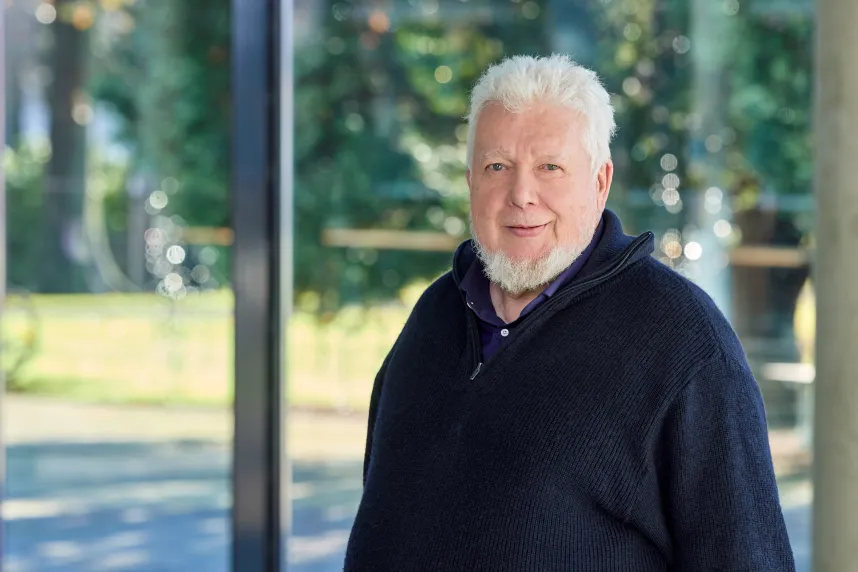
The social fabric in Germany has been worn thin in recent years by global crises and a growing distrust in public and economic institutions, but could religion be a tool in its recovery? New findings in the 2026 Religion Monitor, an empirical study published by the Bertelsmann Stiftung and co-authored by Constructor University Professor of Social Science Methodology Klaus Boehnke, found that social cohesion in Germany is showing signs of recovery after a post-pandemic low in 2023, and that religion may play a role in strengthening community ties, though with some key caveats.
Social cohesion describes how strongly people feel connected to one another and the society they share. The Bertelsmann studies have empirically measured and tracked social cohesion in Germany and other countries dating back to 2017, using a survey-based tool to assess nine dimensions of social cohesion across three core areas: social relationships, connection to the wider community, and willingness to contribute to the common good. The 2026 survey of more than 5,000 adults in Germany resulted in an overall social-cohesion score of 51 points on an index ranging from 0-100. This represented an improvement over a previous low of 46 points in 2023 but still sits well below the 55 points recorded in 2020.
While there are positive signs in the latest data, Prof. Boehnke cautions against interpreting these figures as a straightforward recovery. "I see the score of 51 not so much as a recovery, but an indication that social cohesion may still be following a mild but troubling downward trend compared with pre-pandemic levels,” said Prof. Boehnke. “COVID-19 was a once-in-a-century event that disrupted almost every aspect of social life, including social cohesion. The fact that the index has risen since 2023 does not necessarily mean that the longer-term decline has been reversed.”
This hypothesis may be supported by the uneven nature of the recovery across the different indicators of social cohesion. While scores relating to social relationships and the common good have both improved, those associated with a sense of connection to the broader community remained stagnant at 44 points, while trust in government institutions and perceptions of economic fairness sit precipitously low at 37 and 25 points, respectively.
Prof. Boehnke suggests these contrasting trends may not be entirely coincidental, and may instead indicate a shift towards an increased reliance on personal relationships in a time when confidence in public institutions is particularly weak. "If people feel they cannot trust or rely on their government or economic institutions, they may turn instead to their neighbors, colleagues and friends to seek and provide security,” he said.
Religion as social glue?
The study also examined the relationship between religion and social cohesion, finding that "overall, religiosity plays a positive and... relevant role in social cohesion." On average, respondents with moderately high levels of religiosity recorded higher levels of social cohesion than their less or non-religious counterparts. This suggests that religious communities may still play an important role in fostering social relationships, reciprocal support systems and voluntary community engagement.
However, the findings were not uniformly reflected across all religious groups. Among Muslim respondents, stronger religiosity was still associated with stronger social relationships and orientation towards the common good, but also correlated with lower levels of trust in public institutions and a weaker sense of connection to the broader community. While the report offers no definitive conclusions, it points to a number of possible explanations, including Muslim experiences of discrimination and marginalization, and self-cloistering within religious or cultural communities leading to diminished integration with broader German society.
Prof. Boehnke sees the findings as an opportunity for all Germans to challenge their assumptions about minority experiences in Germany, and to promote an inclusive and supportive society where all are welcome. “The results should encourage those of us in the majority society to reflect on whether all communities are given equal opportunities to feel recognized, represented and connected,” he said. “Exclusion and marginalization weaken social cohesion, regardless of which group experiences them. Treating religious and nonreligious groups equally is therefore essential.”
Prof. Boehnke also acknowledged the potential of all religious communities to leverage their role as agents of social cohesion by building connections that span social and cultural boundaries. “What our society needs is bridging social capital: relationships that connect people across differences,” he said. “In modern society, I believe religious communities can contribute to this by opening their activities inclusively to people from all walks of life. This could set the stage for greater societal cohesion based on an inclusive approach to supporting one another.”
Mending the social fabric
The authors of the Religion Monitor identify three priority areas for action to improve social cohesion based on the 2026 results, with corresponding recommendations for each:
- To address eroding trust in government institutions, they recommend a concerted effort to restore meaningful public participation and greater transparency in public policy.
- Pointing to the growing role of social relationships and community engagement, they recommend promoting and investing in shared social spaces where people from diverse backgrounds can meet and engage.
- Lastly, to address the disparity in social recognition between religious groups, the report endorses efforts to improve structural and symbolic recognition of religious diversity, and greater representation of minority religious groups in civil society.
“Rather than assuming that social cohesion will simply recover with time, we need to invest in fairness and trust in government,” said Prof. Boehnke. “That means increasing transparency and addressing social inequality.”
Prof. Klaus Boehnke is a professor and researcher at Constructor University’s School of Business, Social & Decision Sciences, which brings together research and teaching across psychology, the social sciences, the humanities, business, logistics and economics. Visit the school's website to learn more about its research and study programs.
Receive all updates straight to your inbox.