How Switching Languages Can Make International Students Feel Alone and How to Find Your Way Back
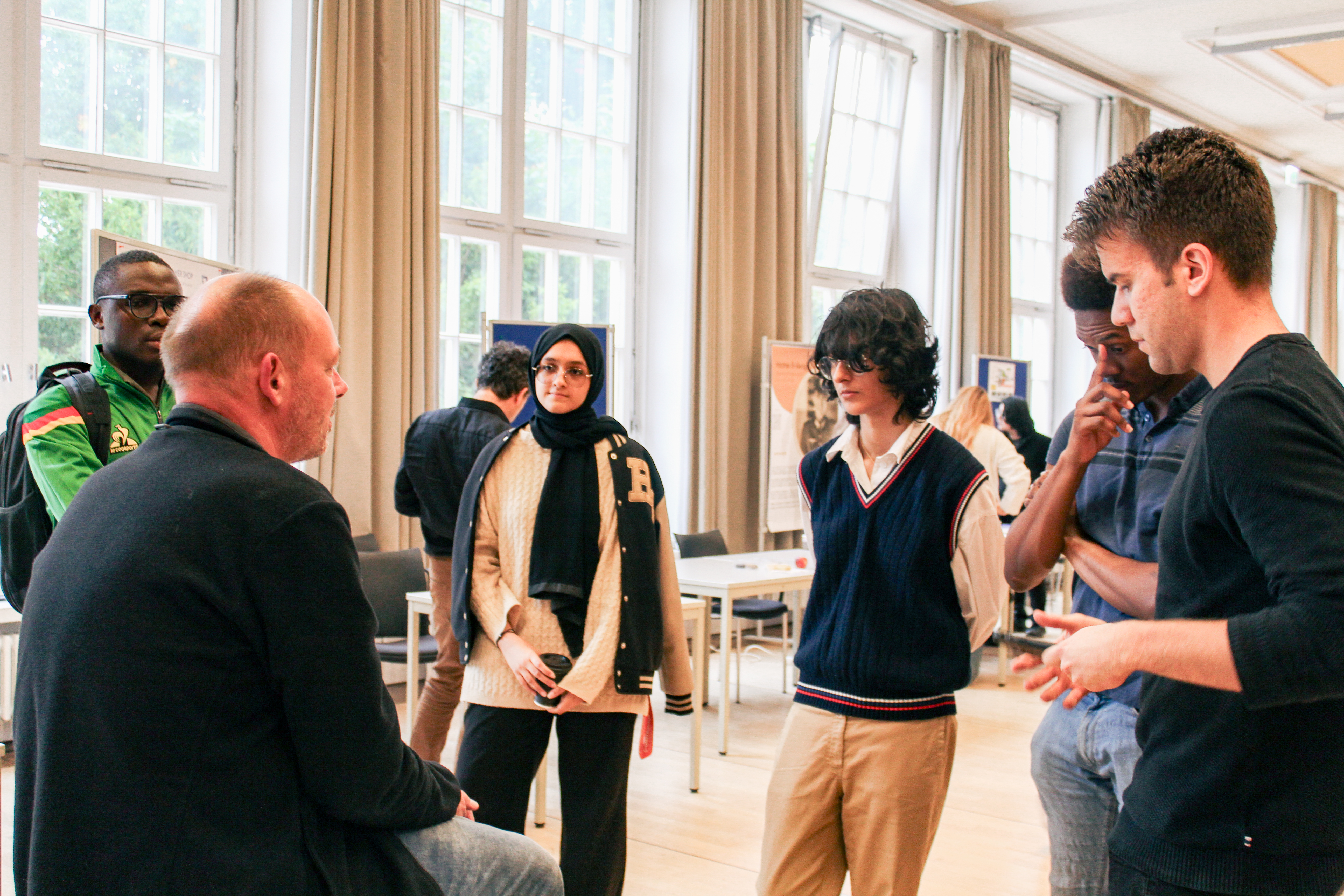
There is a particular kind of silence that international students know well. It is not the silence of an empty room, or a planless boring weekend, not even your dry phone or a quiet library. It is the silence that falls in the middle of a conversation, the split second where you reach for a word, a phrase, and commonly a feeling in your “new” language and find that it simply isn't there.
Not because the feeling doesn't exist, but because the language you are speaking doesn't carry it the way your mother tongue does, you might have found yourself saying the word “I don’t remember the word” way too many time or asking “how do you say this in English?” In that moment, something quietly retreats inside you. And if it happens often enough, that retreat starts to feel permanent. At time it’s not even sad but something more causal like thinking to yourself, “I wish my international friends knew how funny and charismatic I am in my mother tongue”.
This is one of the most overlooked dimensions of international student mental health, not the obvious struggles with academic pressure or homesickness, though those are real too but the slow, subtle erosion of emotional expression that comes from living your days in a language that isn't fully yours yet. It is a form of loneliness that is difficult to explain precisely because the tools you would normally use to explain it words, tone, nuance even gestures are the very things that feel compromised.
When Language Becomes a Wall
Most conversations about the language barrier focus on the practical: misunderstanding instructions, struggling in lectures, feeling embarrassed when your grammar slips. These are genuine challenges, and the examples of language barriers that international students encounter daily from navigating administrative processes to following fast-paced group discussions are exhausting enough on their own. But the deeper issue is emotional, and it receives far less attention.
Emotion is not language-neutral. Research in linguistics and psychology has consistently shown that people feel and process emotions differently depending on the language they are using. There are feelings that exist only in certain languages; the German Weltschmerz, the Portuguese saudade, the Japanese amae and many more captured in the Another Day Another Language Series. Concepts so culturally embedded that translating them flattens them almost beyond recognition. When an international student moves into an otherwise foreign academic environment, they don't just leave behind a country. They leave behind an entire emotional vocabulary.
The consequences of this are subtle but significant. You might find yourself laughing at something that isn't quite funny to you, simply because it seems like the appropriate response or even feeling the need to code switch or try and subconsciously change your accent. You might hold back a strong opinion because you aren't confident you can express it with the force or precision it deserves. You might share a watered-down version of how you are really feeling because the full version exists only in a language no one around you speaks. Over time, this editing of the self, this constant compression of who you are into what you can linguistically manage becomes a kind of social isolation that is particularly cruel because it happens in plain sight, in the middle of conversations, surrounded by people.
Culture Shock Goes Deeper Than You Think
This is closely tied to the broader experience of culture shock in international students, which is itself frequently misunderstood. People tend to imagine culture shock as a dramatic moment of disorientation arriving somewhere utterly foreign and feeling overwhelmed. And sometimes it is. But more often, culture shock accumulates gradually, in small moments. It is the realisation that humour doesn't translate, and in Germany for those of us that come from loud backgrounds, talking loudly on the phone might be misconstrued in public. That at times directness or the lack thereof reads as rudeness in one culture and respect in another. That the unspoken rules governing conversation, eye contact, disagreement, and affection are entirely different from everything you absorbed growing up.
Language and cultural barriers are inseparable in this way. Language isn't simply a tool for exchanging information, it is the primary vehicle through which culture is transmitted, felt, and lived. When both are unfamiliar, the experience of feeling alone intensifies in ways that are hard to articulate even to people who care about you. You are not just missing your family or your home. You are missing a version of yourself the fluent, funny, articulate, relatable, emotionally precise version, the you who exists fully only in your first language.
The Loneliness Nobody Warns You About
Understanding the causes of loneliness in this context means looking beyond the obvious. Yes, being far from home contributes. Yes, the early weeks of adjustment are hard. But the loneliness that lingers the kind that can settle in even after you have made friends, found your routine, and begun to feel more comfortable often has its roots in this emotional distance created by language.
Feeling lonely in a multilingual environment can mean sitting at a dinner table with your multicultural group of friends and laughing along and reacting “appropriately” without truly following the conversation. It can mean sending a message to your new friends and loved ones that says "I'm fine" because explaining the truth in your second/third/fourth/fifth language takes more energy than you have. It can mean performing a version of yourself — confident, coping, adjusted because that is the version your new language allows you to project, even when the internal reality is far more complicated. It might also come in the form of an epiphany that you haven’t spoken in your mother tongue is months which might manifest as feeling as though you are abandoning yourself.
This is not weakness. It is one of the most common human responses imaginable to an enormously foreign and demanding situation. And recognising it, naming it clearly and without judgement, is the first step towards dealing with loneliness in a way that actually helps.
Breaking Through: Practical Ways of Coping
Coping with loneliness in a multilingual environment doesn't mean pretending the difficulty isn't there. It means finding specific, honest strategies for staying connected to others and to yourself.
The first and perhaps most important is giving yourself permission to be emotionally present in your first language. Maybe keep a journal in your mother tongue. Call home and have full, unedited conversations about how you actually feel with your friends and family back home, and when communication with others fails because you may simply not feel like talking to anybody, TALK TO YOURSELF. Find podcasts, music, books, or films in your native language and let them remind you that your full emotional self is not lost, it is just resting while you do something incredibly hard. This is not retreating; it is replenishing.
Second, seek out people who share your linguistic background, not exclusively, and not as a way of avoiding your new environment, but as a grounding practice. Being able to say exactly what you mean, to someone who understands every layer of it in the same environment as yourself is deeply restorative. This university has international student communities, cultural societies, and language groups precisely because this need is real and recognised.
Third, when it comes to breaking language barriers with the people around you, honesty is usually more effective than performance. Telling a friend or classmate "I'm struggling to explain this in English but what I'm trying to say is..." invites connection rather than closing it off. Most people respond to vulnerability with warmth, not judgement. You may find that being open about the difficulty actually creates the closeness you were afraid the language gap would prevent. And when you get through this hurdle you might even shift to a light hearted language lesson with the person you’re conversing with.
Fourth, use movement, creativity, and shared activity as bridges. Sport, cooking, art, music these are forms of communication that don't require fluency. Some of the most genuine connections international students form happen not in conversation but in doing something together. A shared experience creates understanding that language sometimes can't.
Fifth, and critically, take your mental health seriously by seeking help from the University Counseling Team when it becomes overbearing. Many students particularly those from cultures where discussing emotional struggle is stigmatised push through in isolation rather than seeking support. Constructor University offers counselling services and other programs geared towards international student support, and peer networks. Using them is not a sign that you have failed to adapt. It is a sign that you understand your own needs, which is one of the most mature things a person can do.
The Longer View
There is something worth sitting with at the end of all this. The experience of navigating life in a language that isn't fully yours yet, surrounded by languages and cultures that you might have just come in contact with for the first time of reaching across cultural and linguistic distance to connect, to study, to grow, is genuinely hard. It demands a kind of daily courage that people who have never done it tend to underestimate.
But it also builds something. The students who move through this experience not around it tend to emerge with a quality of empathy, adaptability, and self-awareness that is rare and valuable. They learn to listen more carefully, because they know what it is to struggle to be heard. They learn to read context and tone, because they've had to. They learn that identity is more resilient than it feels in the hard moments that the self doesn't disappear when the words aren't there. It waits.
The silence in the middle of a conversation, the moment where the right word in your new language escapes you especially when you are going through hard times, that silence doesn't have to be a wall. With time, with the right support, and with a little compassion for yourself, it can become something else entirely: a pause before understanding, a language lesson with your friends, a beat before belonging and ultimately the space in which something new and resilient is being built.


