Arabic isn’t just a language; it’s a tapestry of history etched in calligraphy and whispered in a dozen dialects. But is it actually possible to master? We sit down with Aya (Lebanon) and Meriam (Tunisia) to unpick the threads of this ‘inexhaustible’ tongue.
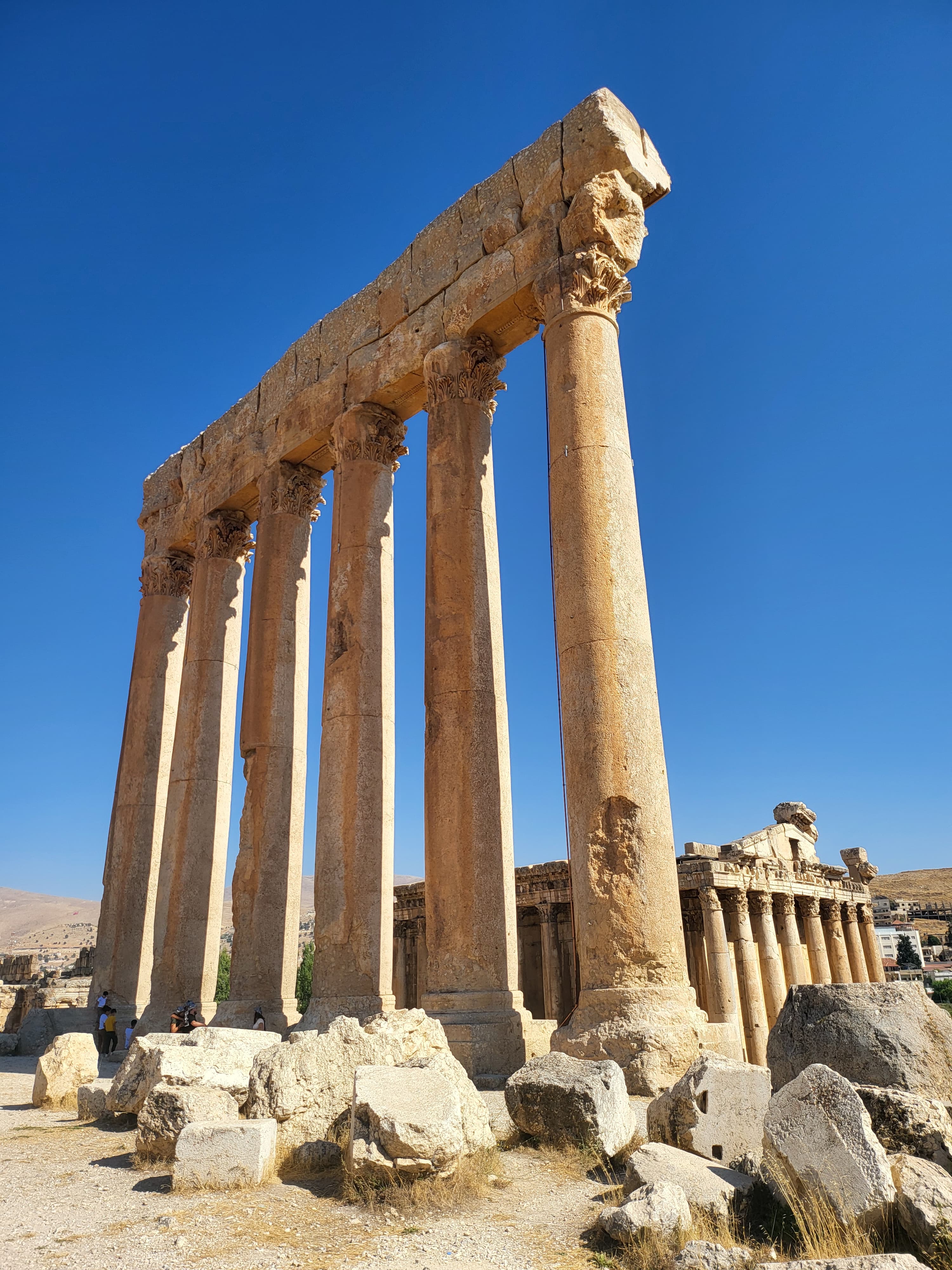
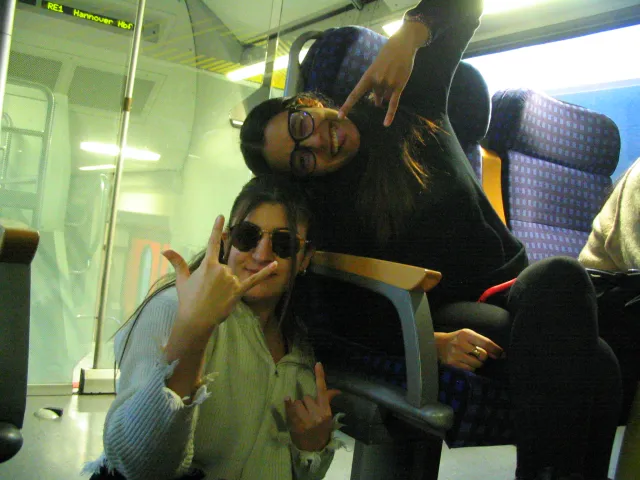
Today we are seeking to peel back the layers of a language that is as daunting in the classroom as it is beautiful in the home by skipping the formal grammar for a “real talk” session with two native Arabic speakers. The conversation starts with the interviewees introducing themselves by their names, the countries they’re from and the languages they speak (in the order in which they learnt them). Aya Abdine, from Lebanon, speaks Arabic first, French, English and is currently learning German. Meriam Askri from Tunisia speaks Arabic, French and English and currently is also learning German.
The age–old question. Is Arabic difficult?
Interviewer: People often assume that Arabic is a difficult language to learn. How would you answer that from a your own perspective as native speakers?
Aya 🇱🇧: As a native speaker, it’s actually very hard to learn—especially if you want to learn “Arabic Arabic” that is used in schools. (This is Modern Standard Arabic (MSA), also known as Fusha, it is commonly used in schools, media and for official purposes). The dialect that we speak daily is a bit easier, but the version done in school is very tough. Typically, you can write an essay in English or in German comfortably, but an essay in Arabic is one of the most difficult things in the world. Even as an Arab person, I find writing a formal essay in Arabic a struggle.
(We all laugh at the shared irony).
Meriam 🇹🇳: I agree. Arabic is uniquely difficult because it isn’t derivative of Latin. While French, Spanish, Greek and Italian have shared roots in Latin and English has been influenced heavily by Latin, it will be easier for someone to learn Spanish if you, let’s say, know English. Arabic stands alone in the Afro–Asiatic family, so there’s a whole new base to learning the language.
Interviewer: So, for a monolingual English speaker, is it going to be a challenge?
Aya and Meriam (in unison): Yes, it will be very difficult!
The First Words.
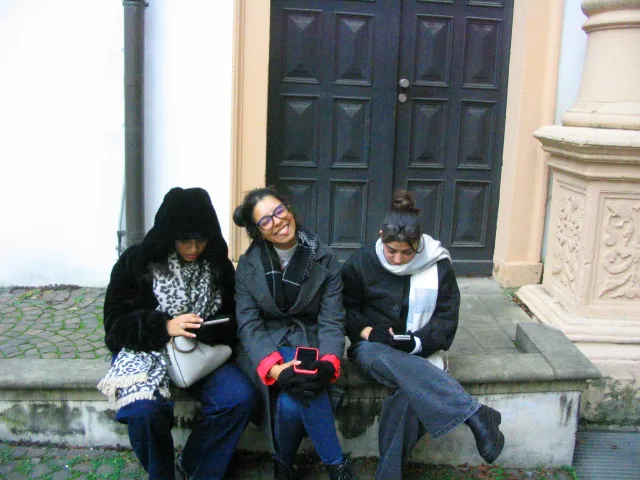
Interviewer: When you started learning Arabic, what was the very first Arabic word you remember learning?
Aya 🇱🇧: That’s a tough one! If I were to ask you the same question about Kiswahili, what would yours be? Usually, you just grow up and find yourself speaking the language. It’s hard to pinpoint a specific “first”.
Interviewer: What about when you observe children or toddlers? What are the first words they’re taught by the people around them?
Meriam 🇹🇳: Maybe Mama (Mum), Baba (Dad ), A’tini - which means “give me”. Kids are always requesting things! Yes, so A’tini is the word you’re looking for.
Aya 🇱🇧: Also, on a lighter note, as Arabs, we teach them how to curse! (A collective, wry laughter follows this admission). Especially when you come to Lebanon, you’ll see parents jokingly tell children, “Baba, say (insert bad word),” just for the shock value.
Beauty of the Script, Scholars, and Aya’s Scruffy Handwriting.
Interviewer: I recently learnt that Arabic has a rich and highly developed tradition of calligraphy. I personally find calligraphy very artistic and beautiful, so Arabic script looks very beautiful to me. Don’t you think so? How did it feel the first time you tried writing it?
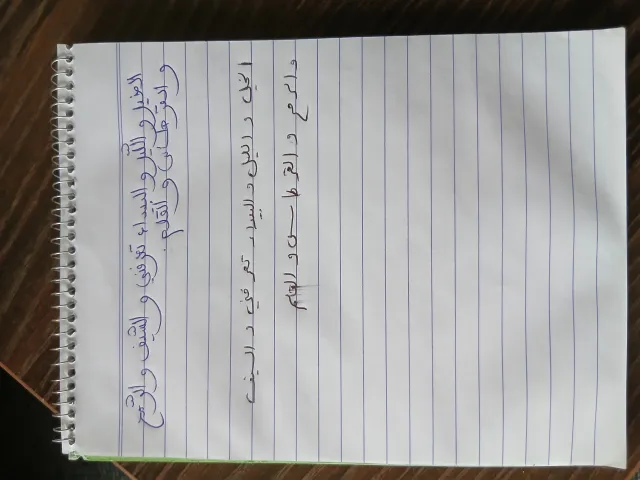
Aya 🇱🇧: To us it feels natural rather than “wow”. Personally, I don’t like writing in Arabic, not because it’s hard or anything; I actually like the Arabic script, but I’m not the biggest fan of my handwriting! You have to really pay attention to details and nuances; there are so many points of focus, and in that sense, it is hard to make the script look beautiful. There are literally people that do Arabic calligraphy professionally; that’s how serious the art form is. But if you saw my writings, you’d be like, “Oh, what the heck is that?”
Meriam 🇹🇳: I actually love writing in Arabic, and my writing is quite good. It comes as second nature to me, as my family comes from a long line of Arabic professors and scholars who are always reading old Arabic books and manuscripts.
An Inexhaustible Language.
Interviewer: What’s the most fascinating or surprising difference between Arabic and your second language?
Aya 🇱🇧: For me it was the difficulty of the exams in school. When doing the language exams (Arabic, French and English) in Lebanon, we were required to write an essay in the last section. I realised that despite Arabic being my native tongue, I preferred writing in French and English because Arabic was quite difficult and complex in comparison.
Meriam 🇹🇳: Arabic is incredibly rich and versatile compared to the other languages I know. There are synonyms and words in Arabic so intricate in their description that they cannot really be replicated in other languages. Another fascinating difference is that if you decided to keep learning Arabic till you were 50 or older, you would still be discovering new things within the language. It is basically an inexhaustible language.
The Timeline of Learning.
Interviewer: How long do you think it would take for a non-Arabic speaker who is learning Arabic consistently to know the language well enough to hold a conversation entirely in Arabic?
Aya 🇱🇧 and Meriam 🇹🇳: You’ll need about one and a half or two years of consistent, daily learning. But if you want to speak and write Arabic like a native? Oooh, that might take forever! It is heavily dependent on your level of comprehension; I think that cuts across most languages. Poetry, Music, and Sentiment.
Interviewer: Arabic has a rich poetry and music tradition — how do language and culture connect?
Meriam 🇹🇳: Arabic is a very florid language. If you want to describe something with sentiment, Arabic is easily the best language for that. There are many details, so much so that when you describe a noun in Arabic, it holds greater sense and meaning. It’s a language that appreciates meticulous descriptions. For example, if someone passes away, an English description might be very simple, but in Arabic, they will describe something as mundane as the person’s eyelashes but in Arabic in such intricate detail that you are able to feel or see that person in your mind.
The 'most Arabic' Thing.
Interviewer: This is a corny and fun question. What is the “most Arabic thing” about Arabic as a language?
Aya 🇱🇧 and Meriam 🇹🇳 (after a long, hearty and reminiscent laughter): The “Aaaaaaaaah”—depending on the tone, it could mean “okay” or also, a very fed-up “what?” There’s also “Mmmmmmhhhhh” or “Uh uh uh”. People usually do this when conversing; they can have a plethora of meanings. These sounds are tonal but could also count as words; they all convey different messages depending on how you say them and the context in which they’re used in.
Basic Arabic words for a beginner.
Interviewer: If you had to teach a beginner three basic Arabic words, which ones would you choose?
Aya 🇱🇧: It’s very easy: Marhaba (Hi), Kifak? (How are you?) and Ma’assalamah (Bye!). In Lebanon we also say Bi’tizir for “I am sorry”.
Meriam 🇹🇳: You can say Asef for I’m sorry in standard Arabic. If you say this in any Arabic-speaking country or to any Arabic speaker, they would immediately understand what you are trying to convey. But in Tunisia we say Samahani which still means sorry.
The Favorite list.
Interviewer: You all clearly have a roster of languages. Would you say that Arabic is a favorite? If you could only keep one language for the rest of your life, would it be Arabic?
Aya 🇱🇧: I don’t think we can really categorize it as a “favorite” because it’s like a base language. I find myself gravitating towards Arabic when I am mad because once again there are words that are able to encompass what I feel perfectly and would hold more weight when arguing with or reprimanding a fellow Arabic speaker. But if I were to pick one to survive with, I would probably pick English or maybe German currently. Hahaha, not a big fan of French!
Meriam 🇹🇳: I would actually pick French, and very soon, German!
Final Recommendation.
Interviewer: Human beings generally like and are significantly influenced by recommendations, especially when they come from trusted sources like friends. So, is Arabic a language that you would recommend for someone to learn?
Aya 🇱🇧 and Meriam 🇹🇳: I would – but only if you learn the language in an Arab country. Arabic is an interesting language outside the difficult exams and essays. It is quite compelling. If you, for example, spend 6 months in an Arab country like Egypt immersing yourself in the culture, it will impact your learning curve and all its nuances positively. Learning it from that viewpoint becomes more of an experience rather than just a boring, monotonous task with a textbook.
After a conversation filled with multiple fits of lethologica, we come to the conclusion that Arabic is a language without borders. As we have seen through Aya’s and Meriam’s eyes. Sometimes the most authentic parts of the language aren’t always found in the dictionary. Instead they live in those gaps of speechless laughter between Aya and Meriam, moments where they try to articulate the untranslatable, like that resonant “Aaaaaaah” that English might classify as a mere onomatopoeia, but which we are reminded is, in fact, purely Arabic. Perhaps the only certain way to truly know that you have learnt a language is in that moment when you have the word at the tip of your tongue and your brain decides to abandon you.
Whether you are drawn to the ornate beauty of its calligraphy or poetic description of the language, learning Arabic is an invitation to see the world differently. It may be a difficult “mountain” to climb, like Aya noted, but Meriam reminds us that it is an inexhaustible journey - the learning never truly stops!
To quote them both: “People who don’t know Arabic are definitely missing out on the funniest jokes; jokes in Arabic just hit different.” If you seek to master it, you don’t just open a textbook. Pack a bag, move to the nearest Arabic-speaking country (for 6 months), find a friend and immerse yourself in the culture. You can even start learning in to just diversify your sense of humour. After all, the best way to learn a language is to live it.
Glossary of Words
Fusha (فصحى) - Modern Standard Arabic - The formal “school” language used in news and books /
Marhaba (مرحبا) - Hello / Hi - The most common, friendly way to greet someone /
Kifak? (كيفك) - How are you? - Typical Lebanese/Levantine dialect /
A’tini (أعطني) - Give me - Often the very first word toddlers learn /
Bi’tizir (بعتذر) - I apologize / Sorry - Used specifically in Lebanon (Lebanese dialect) /
Samahani (سامحني) - Excuse me / Sorry - The Tunisian version of sorry, it is used in similar contexts as the English language /
Ma’assalamah (مع السلامة) - Goodbye - Literally translates to “with peace” /
Asef/Asif (آسف) - Sorry - Used to apologize in standard Arabic.
By Yvette Monari (Class of 2027)


