25 years of Constructors: Arka Halder - the Engineer
In honor of Constructor University's 25th anniversary, we're featuring alumni from past graduating classes to showcase the diversity, values, and impact that Constructor graduates have carried into the world. Check out our previous features:
- 2004: Aakash Jain
- 2005: Neil D’Souza
- 2006: Joanna Bagniewska
- 2007: Binyam Mogessie
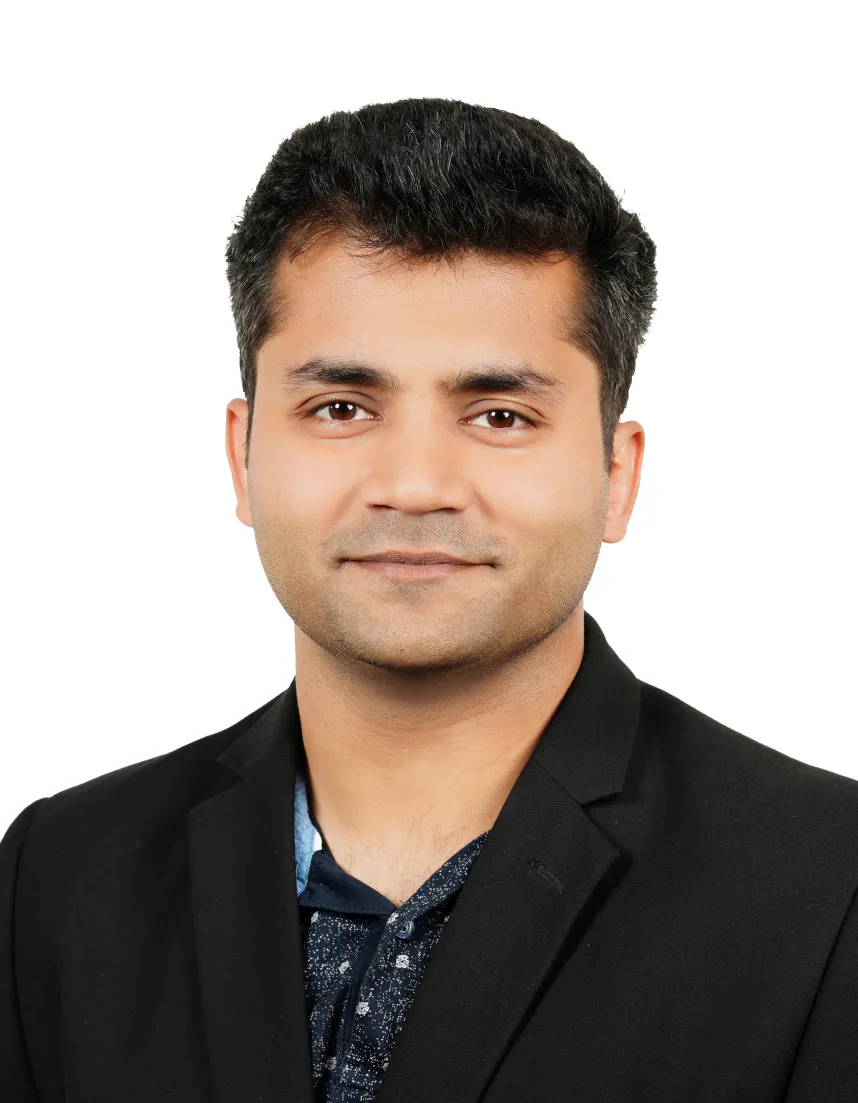
This week, we jump ahead to the class of 2017 with Arka Halder, an RF Device Characterization and Modelling Engineer at NXP Semiconductors, whose educational background in Electronics Engineering drives a passion for contributing to its technological innovation.
Quick Facts:
- Graduation Year: 2017
- Major: Communications, Systems and Electronics
- College: Off campus, but if I had to pick one, C3
- Biggest adjustment coming to Germany: Tooth exercise with Brötchen - considerably harder texture than what I was used to
- The one course/subject that still gives me nightmares: Antennas and Propagation
- On Saturday night, you’d most likely find me: Studying for Antennas and Propagation of course!
- What I miss the most about Bremen: My Host Family
Arka Halder took a bold leap when he decided to pack his bags, move to a new country, and learn to navigate studying and researching in parallel. Now, as an RF Device Characterization and Modelling Engineer at NXP Semiconductors, he works at the cutting edge of the semiconductor industry, testing essential electronic components across extreme temperatures to ensure they perform reliably in modern vehicles, aerospace applications, and future quantum computers.
It’s a remarkable journey of growth made possible by his adaptability and commitment to lifelong learning, which laid the foundation for him to thrive in international settings and build a successful career spanning five different countries. Along the way, Arka earned a PhD in Electrical and Electronics Engineering, mastered the practical complexities of industrial manufacturing, and championed a leadership philosophy centered on humility, heart, and empathy.
We sat down with Arka to talk about the impact of intercultural fluency, the rapid socio-political shifts reshaping the semiconductor landscape, and how a globally oriented university like Constructor University can serve as a powerful antidote to a divided world.
Decision-making is a central theme of our 25th anniversary campaign. Is there a particular decision that had the greatest impact on your life or is there anything you would do differently?
The decision that had the greatest impact on my life and career was choosing to pack my bags, move to a new country, and learn to navigate studying and researching in parallel. Adapting to a brand-new environment, the weather, the culture, the language, and the people, shaped me immensely. It laid the foundation for my ability to thrive in international settings, and it directly enabled me to build a career where I have now studied and worked in five different countries.
If I could do one thing differently, though, I would tell my younger self to be more confident and not hesitate to ask for help. When you are in a completely new environment, you don't have to figure everything out on your own.
If you had to choose one single aspect of your experience at Constructor that has had the most beneficial impact on your career and/or life since, what would it be and why?
If I had to narrow it down to one thing, it would be the invaluable experience of working alongside people from over 100 different nationalities. Being in such a diverse student body taught me how to be genuinely open-minded, to actively accommodate different viewpoints, and to understand and appreciate cultures different from my own. This hands-on intercultural fluency has been the single most beneficial skill in both my professional and personal life.
Your work involves testing semiconductor components across extreme temperatures, from cryogenic (4.2 K) to high heat (175°C). For someone unfamiliar with semiconductors, can you help us understand why this is important? What kinds of real-world applications require this kind of technology to perform reliably under such extreme conditions?
Temperature completely changes how electronic devices behave; that is why we must test them to ensure they won't fail when things get too hot or too cold. This is vital for modern cars, where chips run next to scorching hot engines, and in aerospace applications that face a wide range of temperatures. On the other end of the scale, the advanced chips powering future quantum computers work at cryogenic temperatures. Testing across these extremes is the only way to make sure the technology we rely on stays safe and reliable.
In recent years, the semiconductor industry has found itself at or near the epicenter of a number of global tensions. As someone in the industry, how does it feel to be at the center of these larger socio-political dynamics? Has it influenced your perspective on your work, how you approach it, and/or the role of your industry in responding to these trends?
Being in the semiconductor industry right now means standing at the crossroads of global change. Whether it is geopolitical shifts altering supply chains or the staggering rise of AI driving computing demand, the landscape is moving incredibly fast. For me, being at the center of these dynamics has really highlighted that adaptability is the need of the hour. This environment has completely shaped how I approach my daily work; it forces me to constantly upskill, stay highly aware of global shifts, and remain agile. To survive and thrive in this industry, you have to embrace lifelong learning as a core part of your professional identity.
In a recent LinkedIn post, you shared some advice you received: "titles have to be combined with heart and empathy, not to glorify yourself." Why does this statement speak to you personally? How can someone model that advice in a current societal climate that at times feels increasingly divisive and fractious?
The advice to combine titles with heart and empathy, rather than self-glorification, strikes a deep chord with me because I believe humility is the key to meaningful progress. A title might give you authority, but empathy gives you influence and connection. There is always so much more to learn, and no single person has all the answers. In today’s fractured and divisive societal climate, we can model this advice simply by choosing to listen before we judge. When you lead with humility, you create a space where people feel safe to share ideas and collaborate.
As someone with a PhD in electrical and electronics engineering working in an extremely specialized capacity in the private sector, how would you characterize the differences between innovating in a company environment versus an academic research setting? What advice might you give to up-and-coming Constructor students who are interested in careers where they can contribute to both cutting-edge research and real-world applications?
Academic research is incredible for open-ended thinking. It allows you to prove concepts, explore fundamental science and design highly innovative theoretical solutions. Industry, however, is where you face the expectation-versus-reality gap. It introduces you to the practical side of technology: understanding the actual cost of realizing an idea, navigating supply chains, and solving the complex manufacturing challenges required to consistently deliver high-quality solutions. My advice to Constructor students would be to always dream big but also think practically.
Thinking about today’s global challenges and looking forward to the next 25 years, what kind of lasting legacy or impact do you think a university like Constructor will have or should have on the world?
In a world that often feels increasingly divided, Constructor’s greatest legacy is its ability to prove that we are far more alike than we are different. While mainstream media often highlights negativity and divisiveness, our university stands as a living, lasting example of how friendships and even family (shoutout to the Host Family program) can easily cross borders. Looking forward to the next 25 years, Constructor’s impact should be to continue cultivating global citizens who lead with empathy. By bringing young minds together from every corner of the earth, the university acts as a powerful antidote to division, proving that global challenges are best solved when we collaborate across cultures.
Well said. Thank you for your time, Arka!
Receive all updates straight to your inbox.