25 Years of Constructors: Neil D'souza, the Builder
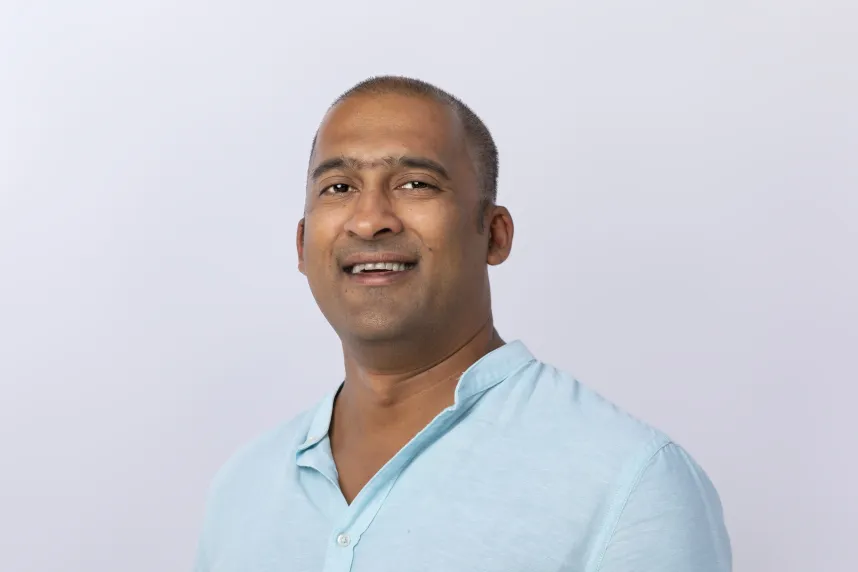
In honor of Constructor University’s 25th anniversary, we’re featuring alumni from previous graduating classes to showcase the diversity, values and impact that Constructor graduates have carried into the world. This week, we shine the spotlight on a distinguished graduate from the Class of 2005: Neil D'Souza.
Quick Facts
- Grad year: 2005
- Major: Geosciences and Astrophysics
- College: Krupp, then C3 as soon as it was built
- One unforgettable memory: seeing the campus for the first time.
- What I miss most about campus: that phase of life with maximum freedom and minimal responsibilities.
- My Constructor experience in 3 words: international, intense, formative
When Neil D'Souza convinced leadership at the International University Bremen to let him and his partners open TheOtherSide (TOS)—the on-campus, student-run bar that has offered a fun, vibrant and safe space for Constructor students to unwind for more than 20 years and counting—he was engaging what would become a defining skill in his life: building things designed to outlast him. Just as a new generation of students is still running and gathering at TOS, D’Souza is still honoring his pioneering spirit to this day as the Founder and CEO of Makersite, a SAAS company revolutionizing product transparency and making sustainable design and procurement more accessible through AI.
We sat down with Neil to talk about the value of learning by doing, how to build things that last, and why indecision is the only bad decision.
Are there aspects of your current life that you can trace back to a formative moment as a student at Constructor University?
The defining experience for my life as a CEO was co-founding and running theOtherSide (TOS), something that was only possible because the university gave students like me that level of freedom and ownership. It forced me into situations most people don’t encounter until much later in life, if ever: negotiating with authority just to get permission to exist, and convincing a diverse group of people to invest their time and energy into physically building something from scratch, running events, and handling all the unglamorous work with no financial incentive.
That’s not theory. That’s leadership under constraint. It also sharpened stakeholder management early. You had students pushing for more, porters dealing with neighbor complaints and pushing for less, and college masters who saw it as a novel way to manage behavior on campus. Balancing those competing interests was constant. But the most valuable part was building something that outlasted any of us. TOS kept running in its original spirit for a decade after I left, and still exists to this day, 25 years later. Two key ingredients, it turned out, were purpose – the why, and culture – the how. Very few people get to experience something like that so early in life, and I’ve carried that pioneering spirit with me ever since.
Decision-making seems like a critical aspect of that experience, and it’s also a central theme of our 25th anniversary. What are some of the key decisions that have helped shape your life trajectory?
Let me start with a slightly unpopular view: there is no such thing as a “good” or “bad” decision. The only real mistake is indecision—waiting too long and letting optionality decay. Some choices will take you the scenic route, some the direct one. In hindsight, they all tend to converge anyway. You end up roughly where you’re supposed to be—just with a different set of stories. If I look at impact, the decisions themselves aren’t unique to me. They’re the same ones that define almost everyone’s trajectory: where you choose to study, who you surround yourself with, who you choose as a partner, the first job you take, where you decide “home” is, and that first meaningful career pivot. What Constructor University—then International University of Bremen—really provided was the first environment where I got to make many of those decisions independently and deal with the consequences. Those are the real inflection points. Everything else is mostly optimization.
In your case, those choices led from studying geosciences and astrophysics to founding and leading an AI-driven software company. How do you connect the dots between your academic and business pursuits?
I actually came to Constructor University planning to study AI, but lost interest in the theory pretty quickly. The courses I took with Professor Laurenz Thomsen pulled me into climate science, which changed my direction completely—a shift that probably wouldn’t have happened without the flexibility this university allowed. After that came student jobs, a master's in environmental physics at University of Bremen, and finally, a role in Stuttgart helping manufacturers understand the environmental impact of their products. Somewhere along the way, it became obvious that the real opportunity was combining product sustainability with AI, leading me to a ‘full-circle’ moment of sorts. Makersite is essentially the result of this path... plus a lot of luck and persistence.
Are there still relationships in your life that you can trace back to your time at Constructor University?
Yes, my wife Flora Dsouza! We met at the registration desk in Ulrike Reimers’ office and have been together for 24 years. We couldn’t be more different, and yet also more similar where it counts. Different backgrounds, different instincts, different preferences. That contrast is exactly what made it work, and something the IUB environment accelerated. Being surrounded by people from very different cultures and perspectives forces you to learn how to navigate differences quickly. That’s a skill that has stayed with us and enriched our journey together.
Speaking of navigating different cultures, you not only stayed in Germany after graduating, but went on to found and lead a successful company here. How did your time at Constructor University factor into that decision?
This university showed me the best side of German society: free, just and respectful. That made the decision to stay much easier. Once you’ve seen that version, you’re willing to accept the trade-offs that come with everything else.
How does your own experience shape your perspective on Constructor University being a pipeline for global talent into the German and European marketplace?
It’s a soft landing. For a lot of global talent, Germany loses out simply because of the language barrier. Constructor lowers that barrier just enough to get people in the door. To fully realize that role, I think it could go one step further by actively connecting that talent to industry, language and long-term opportunities in Germany and Europe.
Did Constructor University’s unique characteristics as a small, private, international campus in Germany contribute to your career in other ways?
Studying in English meant you could focus on the substance instead of fighting the language. The downside is obvious—I got away with not properly learning German, which I regret. But the most valuable part was the interdisciplinary approach the university was built around. Learning to look at problems from multiple angles is an underrated skill—and one I still use daily. In hindsight, the content mattered far less than the environment the university created. You learned how to operate under pressure, how to collaborate, and how to deal with people you fundamentally disagree with. That’s the real curriculum.
Looking ahead now to the next 25 years, particularly in light of today’s global challenges, how can Constructor University continue to have a positive and lasting impact on the world?
Produce adults with character. That means putting people in situations that resemble real life—and showing them what a good response looks like. Stretch them so they understand how to grow. Teach adaptability, persistence, and collaboration, not just knowledge. A large part of what is being taught today will be irrelevant within five years thanks to AI, but the human skills won’t be. Universities like Constructor that are adaptable, entrepreneurial and diverse are uniquely positioned to create that kind of environment.
What advice would you give to current students who are considering an entrepreneurial path in Germany?
Three things: First, learn a domain properly—and don’t treat it like a 9-to-5 exercise. Whether it’s finance, logistics, manufacturing, or something else, depth matters. The “hack together some code and call it a startup” era is largely over. AI does that faster and cheaper now. Second, build at least three years of financial runway before you start. Germany supports founders in principle, but capital markets are conservative. Everything takes longer than you think. Third, build your network early. It compounds faster than almost anything else—and a place like Constructor, with over 20 years of alumni behind it, is one of the best environments you’ll have to build it.
Thank you so much for your time Neil!
Receive all updates straight to your inbox.