25 Years of Constructors: Aakash Jain, the Risk Taker
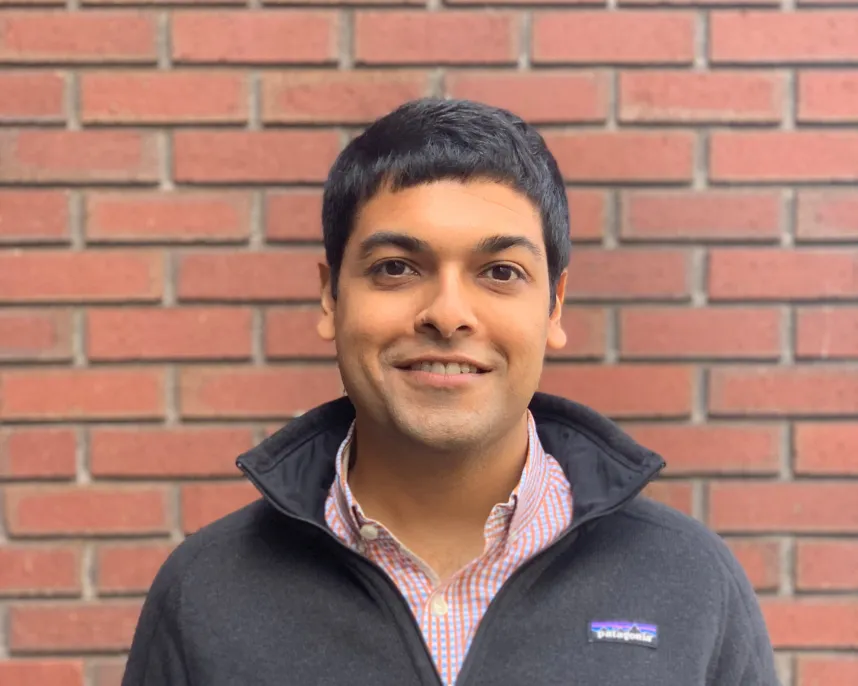
In honor of Constructor University’s 25th anniversary, we’re featuring alumni from previous graduating classes to showcase the diversity, values and impact that Constructor graduates have carried into the world. We start this series off with a member of the very first graduating class in 2004: Aakash Jain.
Quick Facts
- Grad year: 2004
- Major: Electrical and Computer Engineering
- College: Krupp
- What I miss most about campus: The specific quality of bond that forms when everyone is equally lost and equally determined. You can't manufacture that anywhere else.
- Defining world event: 9/11 happened on the first day of classes in 2001 when we arrived, that was quite the way to kick off!
- My proudest moment: The first graduation ceremony — being the first class to walk across that stage.
When Aakash arrived at the International University Bremen in its opening year of 2001, he saw an organization still finding its way from idea to institution. Where others may have seen daunting challenges and uncertainty, the tenacious Delhi native, whose multinational upbringing had already instilled an appetite for the unconventional, saw only opportunity. The opportunity to help build, shape and define the formative years of a university now celebrating its 25th year of constructing future generations of leaders and visionaries.
Aakash is now a Partner at VU Venture Partners in San Francisco, a global venture capital fund specializing in early-stage tech startups. We sat down with Aakash to talk about betting on the unknown, building from scratch and living for the road less travelled.
Decision-making is a central theme of our 25th anniversary. Tell us about a decision, or decisions, that have shaped the trajectory of your life.
Definitely choosing to attend the International University Bremen (IUB) over safer, more established options — and then, once there, choosing to be active and get involved rather than just attending. To understand my decision to attend IUB, you have to understand the path that led there.
I was born in Delhi, moved to Mumbai for middle school, then moved with my family to Germany at age 13. By the time I was choosing a university, I had already reinvented my social world from scratch twice, and learned — through necessity — to be comfortable as an outsider. That upbringing gave me something: a quiet defiance toward the conventional path, and a real ease with the unfamiliar.
So when in 2001 IUB opened its doors as a brand-new institution — one that defied the conventional German university model entirely — it didn't feel risky to me. It felt like exactly the kind of bet I already knew how to make.
Not everyone is comfortable blazing a trail. What about that setting appealed to you?
Honestly, the fact that it was brand new was the appeal! There was no established playbook, no alumni network to call, no proven career path to follow, no century of tradition telling you how things were supposed to work, and no template for what came next. Just a bold idea being built in real time. That kept things exciting!
Stepping into such a new, untested environment, how did you embrace uncertainty instead of letting it define you?
I arrived in Bremen in 2001 as part of the very first cohort, and what I found was an environment that demanded you figure things out as you went. That is what I signed up for, driven by my youthful exuberance and confidence. And that turned out to be exactly the kind of education I needed, even if I didn't fully appreciate it at the time.
Once I got there, the decisions that mattered most were the ones to get involved rather than to just observe and attend. I ran for the first student government elections. We launched a newspaper in the weeks after 9/11 to give our deeply international community a voice. I petitioned the administration when things were wrong — a budget for the international fair, better dining and working laundry machines. Small things. But they gave the institution its heartbeat, and the habit of defaulting toward action and ownership has never left me.
How did it feel to find a university that aligned so closely with your own lived experience?
Attending IUB has been confirmation that the unconventional path works if you back yourself. I arrived at IUB already carrying that belief, forged through years of moving countries and starting over. But IUB was the first place that validated it academically and professionally, and those series of decisions and actions have served as constant reference points whenever I have had to evaluate crossroads in life between choosing the safe path vs the road less traveled (and the answer isn’t always the road less traveled!).
Were there any aspects of those early days that challenged your expectations?
What I least expected about that first year was how sparse and empty the campus could feel, particularly during the long cold winter! That obviously changed as the student body grew in our second and third years there; and how happy we were to have some more students on campus! What I got was a lesson in what it means to be a pioneer - not the easy path, but one defined by a sense of adventure.
What aspect of your experience at IUB has had the most beneficial impact on your life since?
The people — and the specific kind of friendship and trust you build when you're all figuring something out together from scratch, when you’re all equally uncertain but equally committed, when egos are low and the focus is on building.
I had already experienced being the ‘new guy’ when I arrived at IUB, but I had never been in an environment where everyone was new at the same time, where the institution itself was figuring itself out alongside us. Our cohort was a bet on an unproven environment. And together we built something real out of nothing.
That sounds truly extraordinary! How did that shape the relationships you formed?
We all shared (and still do) a very special bond as the pioneering class, and so to be in service of our small community was extremely gratifying. The bonds you form in those conditions don't fade easily. Two decades later, the people I built things with at IUB are still the ones I call. Many are still close friends. Some served alongside me later on the Alumni Association board.
When I was applying for my MBA over a decade later, it was those same classmates I turned to for peer references — not because of professional obligation, but because the trust formed in that first year was genuinely lasting. IUB didn't just give me an education. It gave me a community I've never really left.
And here you are 25 years later! Thinking about this community today and looking forward to the next 25 years, what kind of impact or legacy would you like to see Constructor University and its alumni have on the world?
Competence and character don't have a nationality. Constructor is one of very few institutions that reinforces this value in its very design.
In the 25 years that I have been a part of this institution, I have been blown away by some of the success stories across academia, industry, and personal lives the university has fostered — outcomes that are 1 to 2 standard deviations removed from the realm of possibility had a world-class private international university not opened its doors in Germany.
For example, we wouldn’t have an Ethiopian-origin Board member at one of the largest German companies, and we wouldn’t have world class Romanian researchers and professors at leading US universities had they not had the benefit of leveraging Constructor as a stepping-stone to achieving greater heights.
If Constructor continues to do that with intention — sending graduates into every field, every country, every kind of institution — the impact will be quiet, distributed and enormous.
Even today, you’re still betting on new, untested organizations, investing in startups as a Partner at VU Venture Partners. What’s the saying about old habits?
The parallel hits me often and hard. At IUB my default mode of operation was to be resourceful, to make decisions with incomplete information, and to build things that hadn't existed before. Those are exactly the conditions early-stage founders operate in every day. The best ones aren't waiting for permission or a roadmap — they're writing the constitution as they go, just like we did in that first student government.
When I sit across from a founder now and ask myself whether they have what it takes, I'm partly asking: do they have that same comfort with ambiguity and that same bias toward action? IUB gave me a visceral sense of what that looks and feels like.
Walk us through that visceral sense in practice. What qualities are you looking for in the startups you back?
I back founders who are not scared of the unknown, who back themselves to find a way forward, and who chart new paths rather than follow existing ones. In practice, that means I look for vision and conviction — a genuine, thought-through answer to why them, why this problem, why now. I also look for resourcefulness — the make-it-happen instinct that finds a way when there isn't an obvious one — and intellectual honesty — the ability to move fast without fooling yourself.
At Cornell I helped build a championship-winning Formula-style race car — implementing the fuel injection electronics, fabricating the carbon fiber steering wheel by hand — because the project demanded it. None of those came with instructions. That pattern — the absence of instructions as an invitation — is what I look for in founders.
For students or others considering an entrepreneurial path, how can those qualities be developed, and how can a university like Constructor actively contribute to that growth?
Those qualities can come from anywhere, but they tend to develop fastest in environments that put real stakes on the table. My whole upbringing was that environment — moving countries repeatedly, always the outsider, always having to find my footing. IUB was a continuation of it. We had to write the student government constitution from scratch. We launched a newspaper days after 9/11 because the community needed one.
Universities can absolutely cultivate these qualities, but only if they resist the temptation to over-structure the experience and simulate the stakes rather than creating real ones. The moment a student has to figure out something that actually matters, with genuine uncertainty about whether it will work, is when real development begins. IUB did that for my generation by necessity.
Receive all updates straight to your inbox.