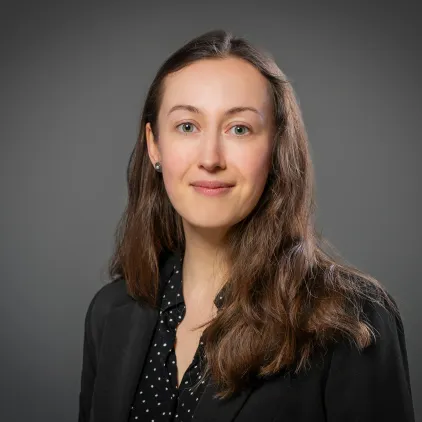
Dr. Jovita Brüning
My research investigates how people control attention and action in situations that require flexible coordination of multiple tasks. I am especially interested in interindividual differences in multitasking and voluntary task switching: Why do some individuals prefer to process tasks more serially, whereas others engage in more overlapping or flexible forms of task processing? How stable are these strategy preferences, and under which conditions do they change?
To address these questions, I use behavioral paradigms such as free concurrent dual-tasking, task switching with preview, conflict tasks, and decision-making tasks. My work examines how cognitive abilities, learning processes, reward and error sensitivity, mental effort, training, ageing, and personality traits shape the strategies people adopt when facing complex task demands.
I combine behavioral measures with neurophysiological methods such as EEG and ECG, and brain stimulation to study the mechanisms underlying cognitive control, performance monitoring, and mental workload. A further focus of my research is how cognitive strategies change across the lifespan, particularly how older adults adapt to multitasking demands and whether preparation, external cues, training, or strategy interventions can support efficient task performance.
Overall, my research bridges experimental cognitive psychology, differential psychology, and cognitive neuroscience, with the broader aim of understanding how cognitive control enables flexible behavior and how it can be supported in demanding everyday and work-related contexts.
Work experience:
- 10/2022 – 06/2026
Researcher
Chair of Neuropsychology, Prof. Ullsperger, Department of Psychology,
Otto-von-Guericke Universität Magdeburg
Research (50%) on connectivity and representations of cognitive control and decision making in the medial frontal cortex
Research (50%) as PI in DFG project „Interindividual Preferences for Different Task Organization Strategies in Multitasking: Plasticity and Mental Workload“ - 10/2022 – 06/2026
Researcher
Chair of Neuropsychology, Prof. Ullsperger, Department of Psychology,
Otto-von-Guericke Universität Magdeburg
Research (50%) on connectivity and representations of cognitive control and decision making in the medial frontal cortex
Research (50%) as PI in DFG project „Interindividual Preferences for Different Task Organization Strategies in Multitasking: Plasticity and Mental Workload“ - 10/2015 – 09/2018
Researcher
Chair of Work, Engineering, & Organizational Psychology, Prof. Manzey,
Department of Psychology and Ergonomics, Technische Universität Berlin
Research on the efficiency and flexibility of strategies in multitasking - 09/2014 – 02/2015
Project „Reproducibility of psychological science“
Open Science Collaboration
Contribution of a replication study - 2011 – 09/2015
Student assistant
Vision and Motor Group, Prof. Brandt, Charité Berlin
Research on bilateral field advantage in visual short-term memory capacity
Education:
- 2015 – 2020
Doctorate in Dr. rer. nat, (summa cum laude)
Chair of Work, Engineering, & Organizational Psychology, Prof. Manzey,
Department of Psychology and Ergonomics, Technische Universität Berlin
Thesis title: „Flexibility and Efficiency of Individual Preferences for Task Coordination Strategies in Multitasking“ - 2008 – 2014
Diploma in Psychology
Humboldt-Universität zu Berlin
- Brüning, J. (2026). Preview position versus length: Key factors in the time course of parallel processing in multitasking. Memory & Cognition, 54(3), 767-791. https://doi.org/10.3758/s13421-025-01780-3
- Schindler, H., Bista, J., Graffe, P., Ivanova, M., Hahne, F., Kubik, V., Brüning, J., & Rieger, T. (2023, September). Multitasking in complex environments: An attempt to generalize individual differences in multitasking to a realistic task setting. Proceedings of the Human Factors and Ergonomics Society Annual Meeting, 67(1), 2346–2352. DOI: https://doi.org/10.1177/21695067231192874
- Broeker, L., Brüning, J., Fandakova, Y., Khosravani, N., Kiesel, A., Kubik, V., ... & Schubert, T. (2022). Individual differences fill the uncharted intersections between cognitive structure, flexibility, and plasticity in multitasking. Psychological Review, 129(6), 1486–1494. https://doi.org/10.1037/rev0000376
- Brüning, J., Koob, V., Manzey, D., & Janczyk, M. (2022). Serial and parallel processing in multitasking: Concepts and the impact of interindividual differences on task and stage levels. Journal of Experimental Psychology: Human Perception and Performance, 48(7), 724–742. http://dx.doi.org/10.1037/xhp0001008
- Reinert, R., & Brüning, J. (2022). Individual multitasking strategies of response organization are stable even under risk for high between-task interference. Frontiers in Psychology, 13, 860219. https://doi.org/10.3389/fpsyg.2022.860219
- Brüning, J., Reissland, J., & Manzey, D. (2021). Individual preferences for task coordination strategies in multitasking: Exploring the link between preferred modes of processing and strategies of response organization. Psychological Research, 85(2), 577–591. https://doi.org/10.1007/s00426-020-01291-7
- Brüning, J., Mückstein, M., & Manzey, D. (2020). Multitasking strategies make the difference: Separating processing-code resources boosts multitasking efficiency when individuals prefer to interleave tasks in free concurrent dual tasking. Journal of Experimental Psychology: Human Perception and Performance, 46(12), 1411–1433. https://doi.org/10.1037/xhp0000865
- Bruening, J., Ludwig, V. U., Paschke, L. M., Walter, H., & Stelzel, C. (2018). Motivational effects on the processing of delayed intentions in the anterior prefrontal cortex. NeuroImage, 172, 517–526. https://doi.org/10.1016/j.neuroimage.2018.01.083
- Brüning, J., & Manzey, D. (2018). Flexibility of individual multitasking strategies in task-switching with preview: Are preferences for serial versus overlapping task processing dependent on between-task conflict? Psychological Research, 82(1), 92–108. https://doi.org/10.1007/s00426-017-0924-0
- Kraft, A., Dyrholm, M., Kehrer, S., Kaufmann, C., Bruening, J., Kathmann, N., ... & Brandt, S. A. (2015). TMS over the right precuneus reduces the bilateral field advantage in visual short term memory capacity. Brain Stimulation, 8(2), 216–223. https://doi.org/10.1016/j.brs.2014.11.004
- Open Science Collaboration. (2015). Estimating the reproducibility of psychological science. Science, 349(6251). https://doi.org/10.1126/science.aac4716