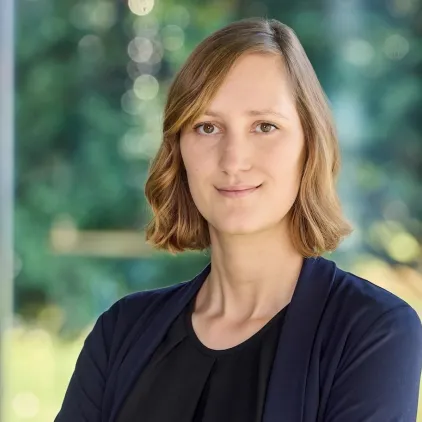
Image
Maren Schenke

Prof. Maren Schenke

Assistant Professor of Molecular Cell Biology
School of Science
Constructor University Bremen gGmbH
Campus Ring 1 / 28759 Bremen / Deutschland
Phone number
+49 421 200-3247
Fax number
+49 421 200-3249
Email Address
mschenke@constructor.university
Office
Research II, Raum 119
Research Interest

My research focuses on the development of neuronal models derived from human induced pluripotent stem cells. By increasing the physiological relevance of these models, we can improve translation and generate findings that are more applicable to human biology. A key aspect of my work is to implement sex as a biological variable, for which sex hormones are essential. With this, we can generate models that account for sex differences, which are especially pronounced in neurodevelopmental disorders such as autism. We use these models to study how different diseases or neurotoxicants affect neuronal function and network development in a sex-specific manner. With this, we can develop more personalized and effective treatments for neurological conditions.

Recent Publications
  • Schenke, M., Laird, J., Rittenhouse, A., Kucheryavenko, V., Neuhaus, W., Chen, O., Sabunciyan, S., Maertens, A., Smirnova, L. (2025). Genetic Background and Sex Modulate Androgen Responses in Human Brain Microphysiological System, bioRxiv 2025.12.03.692130, https://doi.org/10.64898/2025.12.03.692130
  • van der Molen, T., Spaeth, A., Chini, M., Hernandez, S., Kaurala, G., Schweiger, H., Geng, J., Bartram, J., Dendukuri, A., Zhang, Z., Gonzales-Ferrer, J., Bhaskaran-Nair, K., Blauvelt, L. J., Petzold, L. R., Alam El Din, DM., Smirnova, L., Laird, J., Schenke, M., Colquitt, BM., Mostajo-Radji, MA., Hansma, P. K., Teodorescu, M., Hierlemann, A., Hengen, K. B., Hanganu-Opatz, I. L., Kosik, K. S., Sharf, T. (2025), Preconfigured neuronal firing sequences in human brain organoids. Nat Neurosci. https://doi.org/10.1038/s41593-025-02111-0 
  • Giridhar, N. J., Hambrecht, B., Schenke, M., Seeger, B., Bischler, T., Briese, M., & Lüningschrör, P. (2025). Temporal transcriptomic profiling of human three-dimensional neuromuscular co-cultures. Biology Open, 14(9), bio062196.; https://doi.org/10.1242/bio.062196 
  • Debad, S., Aungst, J., Carstens, K., Ferrer-Alegre, M., Fitzpatrick, S., Fritsche, E., Geng, Y., Hartung, T. Hogberg, H., Li, R., MacMahon, S. Mangas, I. Marty, S. Musser. S., Perron, M., Rattan, S., Rüegg, J., Sachana, M., Schenke, M., Shafer, T., Smirnova, L., Talpos, J., Tanguay, R.L., Terron, A., Bandele, O. (2025) State of the science on assessing developmental neurotoxicity using new approach methods., ALTEX, 42(1), pp. 121–144; https://doi.org/10.14573/altex.2410231
  • Alam El Din, D.-M., Moenkemoeller, L., Loeffler, A., Habibollahi, F., Schenkman, J., Mitra, A., van der Molen, T., Ding, L., Laird, J., Schenke, M., Johnson, E. C., Kagan, B. J., Hartung, T., & Smirnova, L. (2024). Human neural organoid microphysiological systems show the building blocks necessary for basic learning and memory. Commun Biol 8, 1237 (2025). https://doi.org/10.1038/s42003-025-08632-5.
  • Hutchings, A.-J., Hambrecht, B., Veh, A., Jadhav Giridhar, N., Zare, A., Angerer, C., Ohnesorge, T., Schenke, M., Selvaraj, B. T., Chandran, S., Sterneckert, J., Petri, S., Seeger, B., Briese, M., Stigloher, C., Bischler, T., Hermann, A., Damme, M., Sendtner, M., & Lüningschrör, P. (2024) Plekhg5 controls the unconventional secretion of Sod1 by presynaptic secretory autophagy. Nat Commun 15, 8622. https://doi.org/10.1038/s41467-024-52875-5
  • Hartung, T., Schenke, M., Smirnova, L. (2024) Brain organoids as a translational model of human developmental neurotoxicity, In Advances in Neurotoxicology (Vol. 12, pp. 83-106), https://doi.org/10.1016/bs.ant.2024.07.002