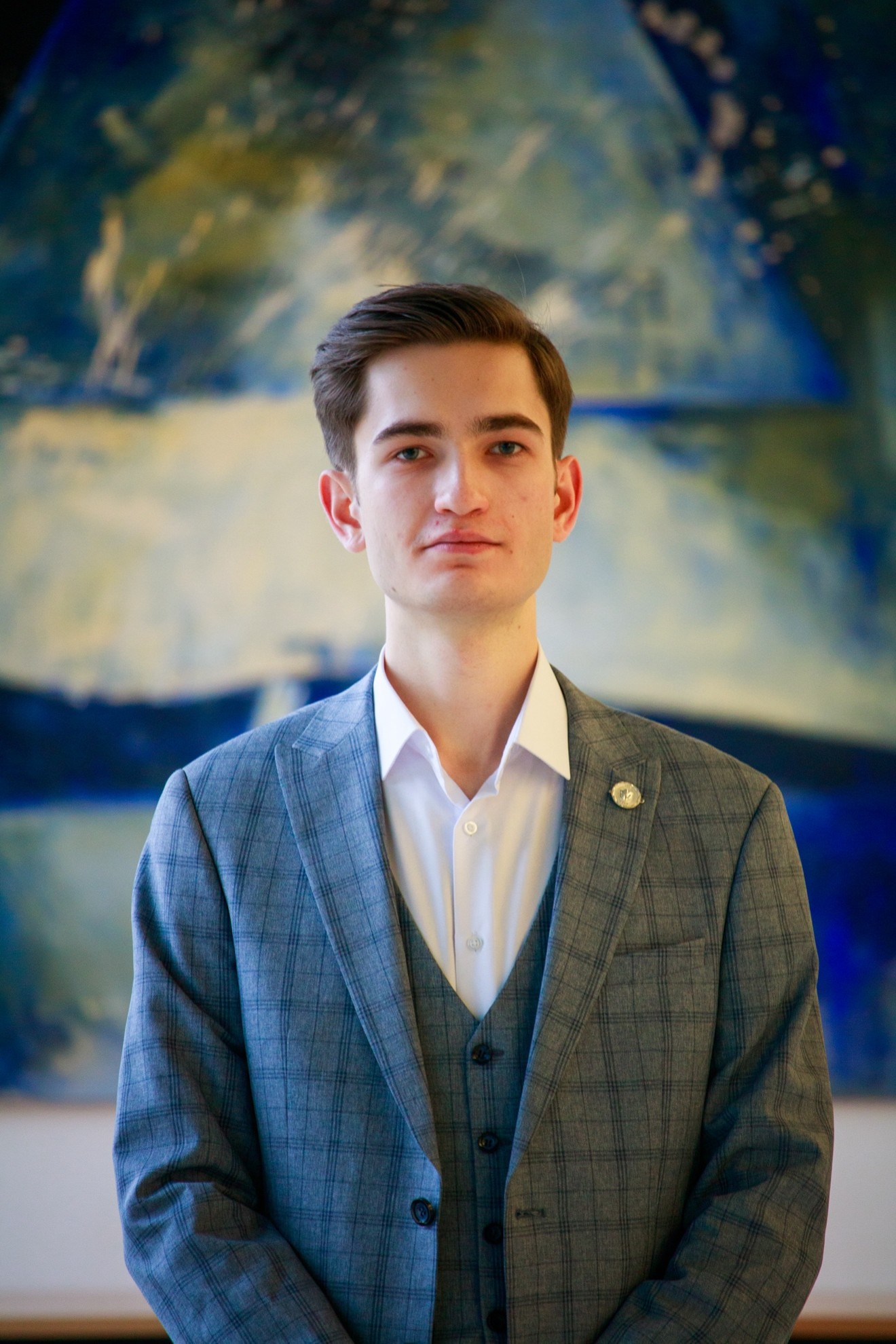
I had the opportunity to sit down with Ruslan, a third-year Medicinal Chemistry and Chemical Biology (MCCB) major from Russia, to learn more about his experiences in one of Constructor University’s most rigorous and rewarding programs. We spoke about his journey into chemistry, what the MCCB program is really like, and the challenges he’s faced along the way. As always, I also asked what advice he’d give to anyone considering MCCB.
From Medicine to MCCB
To start, I asked Ruslan why he chose MCCB. Initially, his plan was to go to medical school, so he was looking for a program that would serve as a strong foundation for that path. “I wanted something medically oriented,” he explains, which led him to consider biochemistry and medicinal chemistry. What ultimately drew his fascination to MCCB was its stronger focus on chemistry. Having fallen in love with chemistry in high school, thanks to an inspiring teacher and a more research-oriented curriculum, he knew he wanted to continue exploring that interest. Sometimes, it’s not even the subject itself but the people behind it that shape your academic journey.
Life in the MCCB Program
When it comes to the MCCB experience, Ruslan describes it as both research-driven and surprisingly engaging. While he didn’t have very specific expectations going in, he found that the program exceeded them—especially in terms of faculty. “I’m still fascinated by the professors we have,” he says. “They’re some of the most amazing people, and they really make you enjoy what you’re studying.” One standout aspect of the program is the emphasis on hands-on learning. From intensive intersession labs to independent research, students are constantly applying what they learn. Ruslan recalls how these lab sessions, though exhausting, were also incredibly fun: “You’re just submerged in what you’re doing, and sometimes you even forget you’re being graded.” Beyond coursework, his research experience was a major highlight. Working in a lab and contributing to a publication was a defining moment in his academic journey—something that made all the effort feel tangible and worthwhile.
Challenges & Misconceptions
Of course, MCCB isn’t without its challenges. For Ruslan, the biggest hurdle wasn’t necessarily the academic content itself, but balancing everything—coursework, research, and work. Managing all of this required strong discipline and time management. One key lesson he learned was prioritising rest. “It’s better to have a healthy sleep schedule,” he explained. “If you sleep well, you’re more productive.” We also talked about common misconceptions about MCCB. Many people assume the program is heavily focused on medicine—expecting courses like anatomy or physiology—but that’s not entirely accurate. As Ruslan explains, MCCB operates on a much smaller scale: “It’s more about molecules, proteins, and how drugs interact with the body.” It’s less about treating patients directly and more about understanding and developing the science behind treatments. So while the name might suggest otherwise, MCCB is deeply rooted in chemistry and research rather than traditional medicine.
Advice for Prospective Students
To wrap up, I asked Ruslan what advice he’d give to future MCCB students. His first tip? Don’t be afraid to approach professors. “They’re very open and willing to help,” she says, and building those connections can make a huge difference in your experience. He also strongly recommends getting involved in research as early as possible. While teaching labs are helpful, they don’t fully capture what real research is like. Even small projects can give you valuable insight into the field. Finally, he encourages students to stay open-minded. MCCB exposes you to many different areas—from wet lab work to computational chemistry—and you might discover interests you never expected. As Ruslan puts it, “Just see what’s out there.”
And there you have it! I learnt a lot about MCCB, and I hope you did too. From passionate professors to hands-on research, MCCB offers much more than meets the eye. With curiosity, discipline, and a willingness to explore, it can be a challenging but incredibly rewarding journey.