25 years of Constructors: Anna-Lena Schindl - the Pioneer
In honor of Constructor University's 25th anniversary, we're featuring alumni from past graduating classes to showcase the diversity, values and impact that Constructor graduates have carried into the world. Check out our previous features:
- 2004 alum Aakash Jain
- 2005 alum Neil D’Souza.
- 2006 alum Joanna Bagniewska
- 2007 alum Binyam Mogessie
- 2015 alum Hashem Al-Ghaili
- 2017 alum Arka Halder
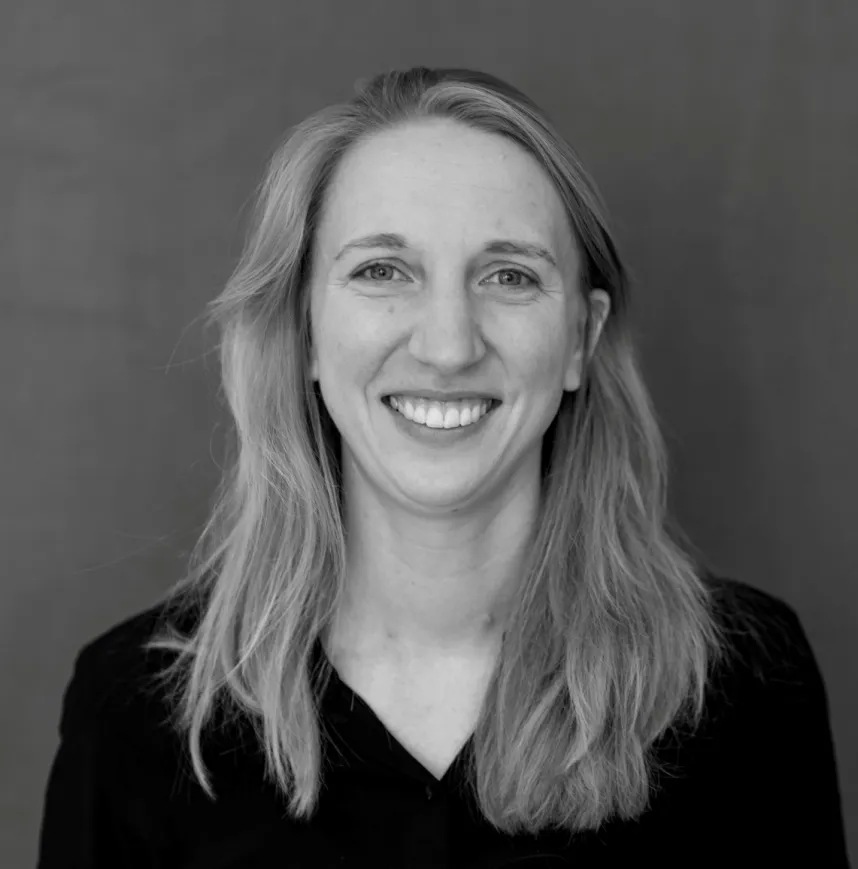
This week, we jump to the class of 2012 with Anna-Lena Schindl, the physicist-turned-investor and entrepreneur who helps turn outstanding research into successful companies as a Principal at Positron.
QUICK FACTS:
- Graduation Year: 2012
- Major: Physics
- College: C3
- An unforgettable campus memory: sliding down the campus green hills on servery trays in the first snow of the season - and for a bunch of people, the first snow of their lives!
- What I miss most about campus: the proximity of so many fun and interesting people - literally just down the hallway!
- A course that still gives me nightmares: Particle Physics.
- My Constructor experience in 3 words: sleepless, enriching, formative.
Anna-Lena Schindl arrived at Jacobs University in 2009 to study physics, but her most valuable lessons on energy, momentum, and impact would come not from the physics lab, but from the tireless spirit of a young, pioneering university that encouraged its students to build, shape, and co-create their environment.
She did just that, channeling her energy into student government and academic affairs, decisions that set in motion a career spent at the intersection of science and startups. Today, she thrives on building teams around breakthrough ideas. As an investor and Principal at Positron in Munich, Anna-Lena helps scientist-entrepreneurs bridge the gap from the lab to the marketplace with the goal of solving major global challenges.
We spoke with Anna-Lena about her journey from physics student to investor, and what she's learned about following your energy, building with the right people, and backing scientists whose ideas the world urgently needs.
If you had to choose one aspect of your experience at Jacobs that had the most beneficial impact on your life since, what would it be and why?
I would definitely say the "pioneer spirit"—the encouragement to shape things yourself and take ownership of how you wanted the university (and later the world) to look like. Before I enrolled, I went on a rather memorable campus tour led by Jan Eichhorn, a student who was a couple years ahead of me. On that tour, Jan fully embodied this energy of actively shaping the university. It immediately resonated and triggered my own sense of ambition.
When I arrived at Jacobs months later, Jan's tour and passion were always in the back of my mind. It inspired me to take on new challenges like joining the Undergraduate Student Government (USG), running the campus's first-ever TEDx event, and designing my own independent study course in my third year. It has also continued to fuel my work with and within startups, and will hopefully lead to founding my own startup very soon. It was my first taste of an environment where I could actively help shape and build things, and I've been drawn to those environments ever since.
Did you form any particularly meaningful or lasting relationships during your time at Jacobs?
Well, I am married to a fellow Jacobs student of my class - so that meeting was certainly rather impactful! Jacobs was definitely a pressure cooker for testing relationships but it set me up with an incredible partner for life. Additionally, my Jacobs roommate is still my best friend and luckily lives less than an hour away from me at the moment!
Decision-making is a central theme of our 25th anniversary campaign. What are some notable decisions from your student years that helped shape the trajectory of your life?
My decision to run for the USG and join the Academic Affairs committee ended up being instrumental to my career at the intersection of science and startups. From the day that I set foot on campus, I knew I wanted to get involved in helping to shape the university, because that energy was everywhere and palpable from the moment you arrived: this is a place to co-create.
I decided to channel that energy into running for student government and was elected in my second year. I also joined the Academic Affairs committee, drawn by my interest to help shape answers to questions like “how do we teach/learn?”. There I met Yehuda Elkana, who was advising the university at the time and offered to introduce me to these young guys in Berlin who were working in education for a summer internship opportunity. Next thing you know, I was a physics BSc student joining an online education startup – the first company to offer open online courses in Europe – which was really just the three founders and I in an office for the summer, but I got to see the team, company, and product be built around me.
Feeling the energy of the team and seeing our passion come to life is what got me hooked on startups. It contrasted greatly with my experience in the physics lab, and I knew I wanted more of that in my life. In 2011 when this happened, the fusion of science and startups wasn’t as big of a thing as it is today. So I diverted from my path in science to explore startups. I moved to the USA for my Master’s because I wanted a chance to experience the startup culture of Silicon Valley firsthand. It took several years, but I have since added science back into the mix and now work right at the intersection of the two. So yes, I would say the non-academic doors that Jacobs opened for me actually ended up doing more to shape my career than my courses.
Please tell us more about your career that followed your time at Jacobs University as you seem to have chosen a path that combines science and business. Which experiences impacted this decision and how has this shaped your perspectives and approach?
After leaving Jacobs, I decided to follow my energy towards startups without knowing what exactly my role would be there (as a BSc in Physics). While my Master's at Stanford focused mostly on courses related to entrepreneurship, I ended up being even more drawn to the d.school (the Institute of Design at Stanford), a rather special, unconventional space. I credit the d.school for pushing me to get comfortable with uncertainty and to do things before I know where they'll lead. I try to espouse these principles not only in my career but in the seemingly small, everyday actions that shape our lives. This can look like following my intuition and trusting my gut to manage the next steps, leaving one place without knowing where the next may be, being comfortable in uncertain situations rather than following a clear path and trajectory. My courses at the d.school also placed a great deal of focus on the ‘why’, so not just worrying about business plans and pitch decks, but really investigating and understanding what the problem was that you were trying to solve with innovation in the first place. That resonated a lot with me.
After my Master's, I joined several startups as employee number one, which gave me the opportunity to work, observe, and grow with various founding team constellations, learning so much about how people run teams and organizations in the process. I built an incubator program designed to help scientists get their research out of the lab and into companies, and I began supporting scientist entrepreneurs as an investor. In general, I have always been drawn to places where I can start and shape things. Now at my current career stage, I am incubating an idea that will hopefully turn into my own startup soon – building on what I observed and learned from others running teams and building organizations.
What advice would you give to current students / recent graduates who are thinking about founding?
Simple: do it. But also recognize that it doesn’t have to happen tomorrow. Contrary to how it may feel at that time, you don’t have to be in your early 20's to start a company. If you are passionate about a certain scientific field, your PhD can be an excellent launch pad for a startup.
Surround yourself with people who are building things and observe how they not only build products, but teams, organizations, and communities around them. People truly are key in all of this. Finding the right people to build with is so much more important than finding the perfect idea.
Lastly, work on something that truly matters to you, not just something that's on-trend or the 'cool' thing to do. If it's something you truly care about, then building that thing, seeing your ideas in the world and taking others along on the ride will give you the energy to overcome the challenges you'll encounter and truly appreciate your successes.
Thinking about today’s global challenges and the next 25 years, what kind of lasting legacy or impact do you think Constructor University can have on the world?
I believe the exact subject you study will be less and less important as our world changes at an ever-faster pace, but what will matter is human creativity and ingenuity: the ability to take action and create change, as well as respect and openness to engaging with other perspectives and opinions. The Jacobs University I experienced had all the ingredients to produce students who excel in these qualities. Constructor University has the opportunity to continue this legacy by equipping its students with more than just a diploma in a particular science, but with the tools and character to navigate a constantly changing world.
Inspiring food for thought. Thank you Anna-Lena!
Receive all updates straight to your inbox.