Image

Our 25th anniversary is a year-long celebration of what makes CU great, an opportunity to highlight the impact Constructors have had on global discourse, research, and our connection to the local community for the past quarter century. By marking this incredible milestone, we aim to deepen our ties to our alumni, register with the broader global academic community, foster self-identity with faculty, and inspire the next generation of changemakers.
To do this, we are highlighting the past 25 years of decision making at Constructor University. By those who have come before us, by those who are shaping the future of academia and by those who will lead the charge into a new tomorrow. During 2026, we’re celebrating the past 25 years of decisions made by faculty, students, and visionaries alike to put Constructor University on the global academic map.
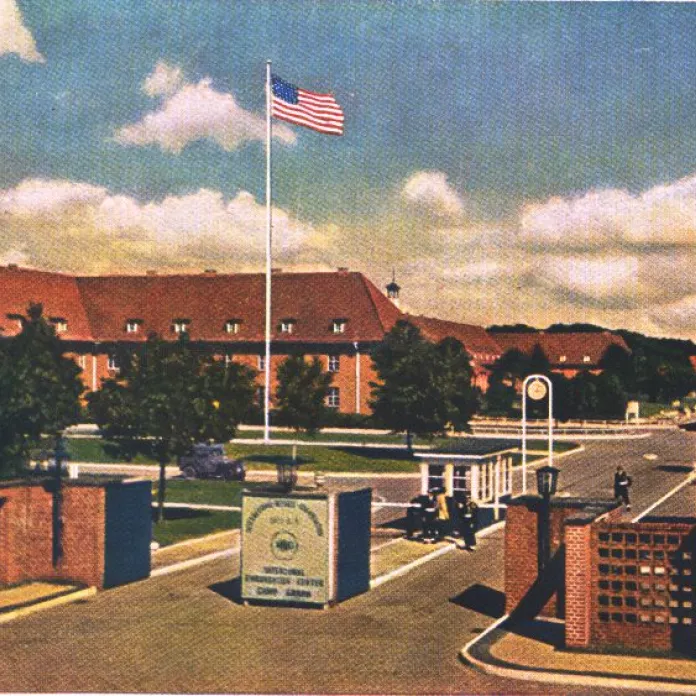
Our Campus grounds were planned and built initially as an army barracks by the Nazis beginning as early as 1936. The military purpose was to build up air defense capacities in Northern Germany, which back then could only have one pragmatic background: going to war with the entire world. Soldiers (not only male but also female) were trained here not only to maintain anti-aircraft positions but also to take part in all WW2 campaigns. Prisoners of War were forced to support the German Reichswehr in their war effort, fighting their own allied troops (this is considered a war crime by the Geneva Convention). There are no known survivors. Interestingly, both the young Helmut Schmidt (SPD) and Karl Carstens (CDU), who later became Chancellor and President of the Federal Republic of Germany, completed their military service here.
After the war, Flakkaserne Grohn was first used as the military headquarters of the Bremen enclave, but then converted into a displaced persons camp organized by the IRO (International Refugee Organization) and administered by US Army forces. Over a million people (former forced laborers, liberated concentration camp inhabitants, and later also German emigrants) were processed on their way to Bremerhaven, where they would be shipped to the Americas and Australia, leaving Europe to begin a new life on other continents. The most diverse people passed through what is now our campus. Not all of them were victims of the NS regime: some Nazi war criminals passed through on their escape to overseas.
During the Cold War, our campus once again became a military site, this time for the newly established Bundeswehr. In the first years, the tank units stationed here were very unpopular because of noise and damages, however the later supply units developed good relations to the neighborhood because they offered jobs and shared their sports facilities with local sports clubs. Despite of the constant fear of the atomic bomb, the site experienced a time of provinciality and calm, which was only interrupted by demonstrations of the peace movement in the 1980s. Towards the end of this period, some critical discussions in the Bundeswehr about its relationship to the Wehrmacht arose. After the collapse of communism, relocation of the supply unit to the near Garlstedt barracks brought military presence in Grohn to an end.
The end of the Cold War was also a time of New Beginnings. After a long period of discussions (dating back as far as the late 1940s), the decision was finally taken to establish an International University on the grounds of Camp Grohn (IUB). It would be the first private full university (Volluniversität) in Germany – a bold transformation not only of the place itself, but also a massive innovation in Germany's system of Higher Education. Here, we see a period of self-invention marked by innovation, creativity, and new ideas. Everyone is in an excited state of fresh beginnings and First Steps into uncharted territories.
Over the years, the university established itself as an internationally renowned institution with top results in research and innovative approaches in higher education. But the fundamental problem remained unsolved: German sponsoring culture proved to be not sufficient for a sustainable way to consolidate the university. Different strategies were discussed, varying from further intensifying the quality of international top research to focus rather on pragmatic education for the local economy. Thanks to a generous contribution by the Jacobs Foundation and the philanthropic approach of Klaus Jacobs, the university, now renamed as Jacobs University Bremen, could maintain its high standards. But the concept of a public-private partnership came to an end, when the Jacobs Foundation stopped its financial engagement and the Freie Hansestadt Bremen decided to stop its financial support.
After a time of uncertainty, finally an investor was found, and we transform into Constructor University. The shift to Constructor University begins with the end of any financial support through the public sector. Again, the university reinvents itself – to become an innovative institution on the Cutting Edge of scientific and educational development, that is focused on rapid growth and self-sustained financial stability. This phase is more about boldly designing a new future than merely confronting the structural issues of the past.


By founders who imagined a new kind of university in Bremen – one built on global collaboration and on advancing knowledge and technology to make learning more effective for all. By researchers who pursued the questions others overlooked, empowering the next generation of scientists, professionals, and leaders. By students who crossed borders to shape their futures here. And by the Constructors whose early work laid the foundations of research and innovation that continue to define our community today.
From a daring experiment to an international hub of education and research, Constructor University has always been shaped by courageous, intentional decisions. Buildings once meant for division now host dialogue, discovery, and collaboration – evidence of a community that sees potential where others see limits. Our culture is one of informed decision-making, tested and refined as new knowledge emerges.
For 25 years, these choices – bold and quiet, personal and collective – have built a legacy of learning, discovery, partnership, and resilience. Through name changes and leadership shifts, our essence has remained the same: a place inspired by, run by, and dedicated to creating Constructors. Like our mascot Joana, we remain adaptable, resilient, and strongest when moving together.
The next 25 years will demand decisions that matter – for CU, for science, and for the global communities we serve. In a unique ecosystem of technology, capital, and knowledge, we choose to lead, not watch from the sidelines. Leadership is a decision – and one we commit to again and again.
So here’s to the choices that brought us here, and to the ones that will define what comes next.