Beyond Influencers: Constructor University Research uses AI to supercharge environmental causes on social media
Effecting sustainable changes to public behavior may be one of the most difficult parts of tackling the many global environmental challenges facing humanity. While social media and influencer culture have become powerful tools for shaping public opinion, new research from Constructor University suggests artificial intelligence could be used to supercharge their impact on environmental causes by combining Large Language Models (LLMs) with social media analytics. In the study, AI models showed that they can effectively complement human influencers by using semi-automated processes to generate highly relevant content and thus make social media interaction scalable at an unprecedented level.
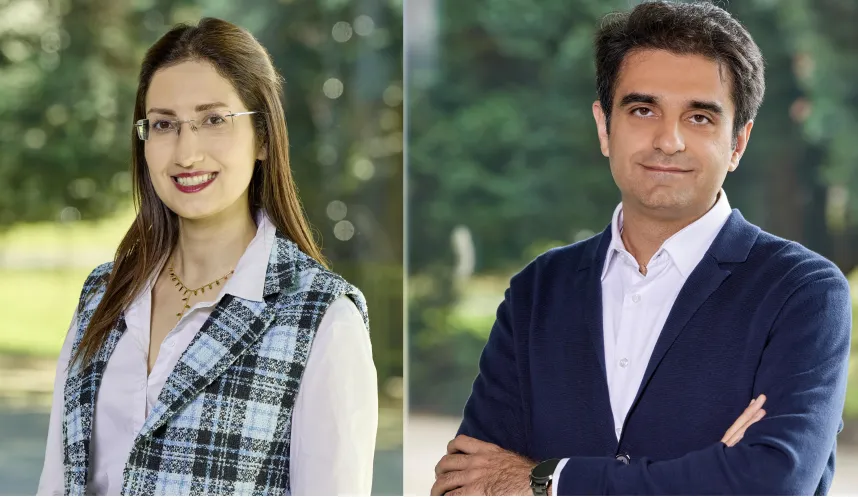
Researchers Dr. Noushin Mohammadian and Prof. Dr. Omid Fatahi Valilai of Constructor University in Bremen have presented a new strategy that merges social media intelligence, behavioral assessment, and AI-assisted content creation to make environmental campaigns more adaptive, responsive, and scalable in engaging the public. Specifically anchored in "Zero Pollution" initiatives, the model utilized AI as an adaptive agent capable of both drafting posts and responding directly to citizen feedback in real-time.
The study, published earlier this year in the Journal of Open Innovation: Technology, Market, and Complexity, introduced a framework designed for global scalability. Researchers succeeded in establishing this framework by precisely measuring outcomes and aligning them with semantic interoperability models —a technical standard that ensures data is exchanged seamlessly and consistently across different systems and institutions.
AI as a tool for trust and policy acceptance
A primary focus of the research is its application within urban environments. Researchers described how LLMs can help establish sustainable operations in cities and increase public acceptance of new environmental policies.
“This research addresses the challenge of mobilizing citizens for sustainability initiatives at a time when digital platforms heavily influence public opinion and behavior,” said Dr. Mohammadian. “By combining LLMs with Social Media Analytics (SMA), our work provides adaptive, data-driven strategies for municipalities and industry. Such applications can help improve policy communication, increase public trust, and support more effective implementation of sustainability initiatives. My motivation for pursuing this topic comes from a growing interest in how AI can be used as a supportive tool to enhance participation and informed decision-making rather than replace human actors.”
Efficiency and ethical governance
The framework, developed by the “Emerging Technologies in Industrial Engineering” (EITIE) group, integrated behavioral analysis directly into campaign management. This allows organizations to react consistently and promptly to feedback, even when resources are limited.
Prof. Dr. Fatahi Valilai emphasized the strategic importance of the study: “As institutions work to mobilize public support for sustainability while guarding against misinformation, our research offers an evidence-based pathway for communication at scale. I see immediate applications for NGOs, cities, and mission-driven brands especially where regulatory initiatives like the EU’s Digital Product Passport are raising the bar for transparency, traceability & extended producer responsibility.”
Receive all updates straight to your inbox.