Positively impacting the community with science – Students at Constructor University unveil Community Impact Projects
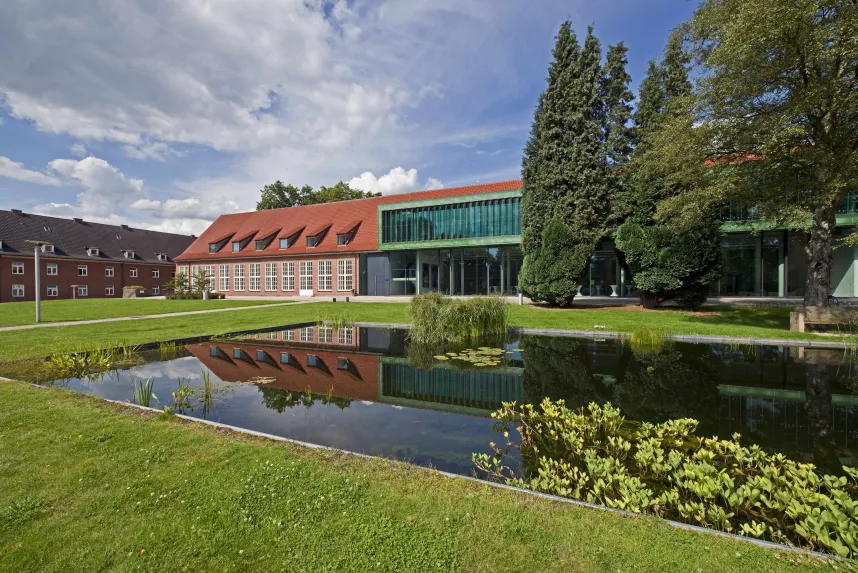
From AI-powered sports training to kindergarten-safe science experiments and a remote-control robotics lab, the annual Community Impact Project (CIP) fair at Constructor University showcased how students are applying their academic knowledge to make a tangible impact in the local community of Bremen Nord and the surrounding region. As a mandatory component of all undergraduate programs at Constructor University, CIPs partner students with regional organizations to implement innovative and practical projects that serve the common good.
“The intent of every CIP is defined by a real need,” explained Dr. Jakob Fruchtmann, a Professor of Sociology who helped spearhead the CIP format at Constructor University. “Students might come up with a fun idea, but if no one needs it, then it’s not a project. What makes this powerful is that they are not studying for an exam, they are learning to solve real problems right here in our community.” Every CIP is done in collaboration with a regional partner, with partners ranging from non-profits and NGOs to schools, businesses, startups and even individuals in certain cases. “We’ve had all of the above, and we try to keep an open mind about these partnerships,” said Fruchtmann. “The important thing is that these partners are from here and that they have a need we can help them with.”
Since helping to facilitate the launch of Constructor University’s CIP initiative in 2020, Fruchtmann has seen more than 1,200 students participate in over 50 projects, forming collaborations with more than 60 regional partners. He credits the inspiration for the model to the broader North American tradition of “service learning,” which has since been gaining traction internationally. “In our context, it’s a lighthouse project in Europe,” he said. “We combine three things that are unique: a campus university, the most international student body in Germany, and a mandatory service-learning component embedded in the curriculum.”
Held in trade-fair format on February 11, this year's CIP fair showcased the nearly 20 community impact projects that have been active this school year. Participating students at each booth shared firsthand knowledge, experience and outcomes of their projects with newer students, who in turn could learn more and ultimately sign up to participate in a CIP of their choice.
Popping the Bubble
For Constructor University’s overwhelmingly international and culturally diverse student body, the mandatory participation in a CIP can offer an invaluable opportunity to step outside the “campus bubble” and gain valuable intercultural experience with Bremen locals while applying the academic knowledge they’ve learned in their studies. Around half of Constructor University graduates remain in Germany after completing their studies. The CIP model provides early exposure to the local language, professional expectations and social realities.
Third-year science student Teagan participated in the “Easy-Safe Experiments” project, in which students visited local kindergartens to conduct fun, hands-on and child-safe science demonstrations. From homemade lava lamps to child-friendly chemical reactions, the project introduces safe, interactive experiments designed to ignite early curiosity and enthusiasm for science.
Working with young children forced us to communicate complex ideas in simple, exciting ways, which is important because research is worth nothing if you can’t explain it,” said Teagan. “Because many of the kids don’t speak English, it’s also one of the few moments where we got to truly engage with the local German community.”
For Adea Shala, a biochemistry and cell biology student participating in the “Leben in Bremen Nord” project, community engagement meant navigating language barriers while supporting both schoolchildren and senior residents in Vegesack. “At first we were nervous because most of the people didn’t speak English,” she recalled. “But in the end, even with half-German, half-English conversations, we understood each other. It became less about language and more about connection.”
Her team organized social activities, English tutoring and cultural exchanges in senior residences. “It was important for us to show that we are part of this community,” added Shala. “We’re not just living on campus. We want to contribute and be present.”
International mission, local impact
The initiative has been equally valuable at helping to forge the deepening bond between Constructor University and its surrounding neighbors. Since its founding 25 years ago, the university’s international, private mandate has at times let to perceptions of the campus as being aloof, elitist or cloistered from the surrounding community. The projects and regional partnerships formed through the CIP initiative have helped greatly reshape these perceptions over the past six years.
Projects like Robokids – a partnership that gives Bremen school students remote access to Constructor University’s world-class robotics lab for educational purposes – showcase the potential of the initiative to connect the university’s world-class academic environment to local need. “Bremen is a small, tightly connected city,” explained Dr. Fruchtmann. “If you want to move things here, you need to be part of those horizontal networks — schools, NGOs, business owners, social workers, political actors. The CIP has helped to make those connections numerous, visible and real.”
Fruchtmann recounted a recent meeting between the university and local politicians, where he was asked to present information about the initiative alongside major international research projects worth hundreds of millions in global funding. “I felt almost sheepish presenting in this context, but still I explained the success and impact we’d been having. Lo and behold, when we got to the discussion period, the first topic they came back to and asked about were the community impact projects,” said Fruchtmann with a smile. “That showed us that this kind of engagement truly matters for the region.”
Fruchtmann said it has been encouraging to see the community take notice, and emphasized that the call-to-action is open to any regional organizations, schools, businesses, startups and others who have a need: “If there is a challenge in Bremen Nord or the wider region, we want people to contact us. The starting point is always the same: What is needed and how can we contribute?” He said. “Our science is in service of real problems.”
Receive all updates straight to your inbox.